Tuesday, October 22, 2013

Enough is enough


It is with a great sense of relief that I can stand here before you this morning and say “soccer season is almost over.”  Not that I haven’t enjoyed taking my daughter to the practices and watching the games, or that I’m not proud of her and of her teammates for the hard work they have put in and the improvement they have made over the last couple of months.  But it has been a big commitment of my time.  For some reason it has worked out that all of the practices and most of the games have been on evenings when my wife works, so it has mostly fallen to me to be the chauffeur and the cheerleader.   There have been days when Meg has dropped Risa off at my office at 4:00, where she’s watched TV on the computer until 5:00, at which time I’ve helped her get into her soccer gear and delivered her to the practice field at 5:30, gone home to make a salad, picked up a pizza, returned to get Risa at 6:30, swung by for the baby sitter, dropped the two of them off at home, stuffed some pizza in my mouth and returned here to the church for a two-hour vestry meeting at 7 o’clock.  I’m sure many of you know what that’s like.
So when you and I wish we had more faith and a stronger relationship with God, when we imagine our lives more abundant with the grace of Christ, it doesn’t necessarily mean that we want our names recorded in the church’s calendar of saints.  We’re not necessarily asking to be missionaries or martyrs, or miracle-workers, or leaders of great movements of religious renewal.  We might just be asking for the faith to get through soccer season.  We might be praying for the faith to get through the loss of a job, or the death of a parent, or a diagnosis of cancer.  Maybe we did start out with dreams of a doing something really important and impressive for God, and instead we found that the ordinary trials of life ask us for more faith than we think we’ve got, and we wish we had more.
When the disciples of Jesus him to increase their faith, the Gospel of Luke doesn’t tell us exactly why, but from the answer Jesus gives them, you can guess that they want to be more like him.  They want something like his spiritual greatness, or at least his miracle-working power, and they think that the reason why they don’t have it is that they don’t have enough faith.  This attitude is still common today.  The world is full of people who say, “if only I had more faith,” meaning “if only I believed in God harder,” or “if only I had more positive thoughts,” or “if only I wasn’t so afraid;” and then you can complete the sentence with any number of counter-factual results—“I wouldn’t have gotten sick,” or “I could have changed my ex-husband” or “I would have the glamorous, successful life I was supposed to have.”
Now this may seem kind of insensitive, and go against the grain of our habit of taking everything that Jesus said extremely seriously at face value, but Jesus turns this idea of what faith is into a joke.  If anyone in this room found that they suddenly the faith to obtain their heart’s desire, would he or she really use it for something as silly and pointless as uprooting a mulberry tree and planting it in the ocean?  Again, for Jesus, the notion that if we only had more faith we could be something that we are not, and make our should-haves, and would-haves, and could-haves come true, is a joke. 
But at the same time Jesus says something important about faith—something positive.  And to illustrate his point he refers to his old friend the mustard seed.   Now there can’t be a lot of faith in something as tiny and insignificant as a little round mustard seed.  But a little teensy-weensy amount of faith is all it needs.  All it needs is enough faith to sprout.  And then God goes to work.  God gives rain and dew for the moisture it needs.  God gives the soil to anchor its roots and feed it with nutrients.  God gives it sunshine and carbon-dioxide from the air so its little leaves can make food.   And the mustard seedling has the faith to receive what God gives, not trying to be something that it’s not, but just growing, a little more every day, until somehow, miraculously, that tiny mustard seed becomes a large shrub, twice the height of a man, in a single season.
We imagine from reading the Gospels that Jesus could do anything.  Maybe he could have uprooted a mulberry tree and planted it in the ocean—if he’d wanted to.  But we don’t really know, because although he did do amazing things like walk across the stormy lake and feed five thousand people with a few loaves and a few fish, he only did those things because that was what God wanted him to do in that moment.  He never did them to promote himself or to test the limits of his power.  He did them to show the greatness of God, and to help people. 
Faith is the radical act of surrendering one’s life to the will and the purpose of God, and with faith we can do incredible things, because it is God who does them.   And just a little faith is enough, because what God gives is enough.  Instead of asking why God didn’t give her something bigger and better, the faithful person says, “thank you.”   “Thank you, God, for your gifts.  Now—how can I use these gifts to serve you?”

The fall Stewardship Season begins today at St. John’s, and the theme we’ve chosen for this year’s program is “Sharing in Abundance.”  This is taken from a passage in 2nd Corinthians where Paul urges the church at Corinth to have faith that God is able to provide them with abundant blessings.  What that means in practical terms is that each of them can trust that they will have enough, not only for their own needs, but that they will also be able to share in the good works that all of them are doing together.  This passage, like the gospel today, speaks to the truth that, to be really happy, to have full human lives we need something more than the bare necessities of survival.  And we need something more than to accumulate a surplus in the form of money in the bank and closets full of clothes and garages stuffed with knick-knacks and toys. 
We have a need, not a passing whim, but a core spiritual need, to be of service.  We need to have a share, a part to play, in doing something good, something good that’s bigger than we could do by ourselves.  So when we talk about “abundance” in connection with Christian stewardship, what we are saying first of all is that we are committed to being a community that serves, that seeks to be faithful to the will and purpose of God and to gather together the gifts we have received and put them to work for the good of others.  And we are also saying that every one of us is blessed with enough to contribute something important to that work.   We may not end up revered as martyrs of the faith.  We may not be called on to spend our very life’s blood in God’s service.  And maybe we will.  But in any case, God is able to give us enough, and more than enough, to make a difference.
  

Thursday, October 3, 2013

Cooking the books


Last Monday, as I usually do, I dropped my daughter off at school and then went surfing.  I have a standing arrangement with Susan Stewart that I can park on the street in front of her house, from which place I can put on my wetsuit and carry my surfboard down the hill to Dillon Beach.  It’s a little extra work, especially on the way back up after a couple hours of hard paddling, but it’s well worth it, because it saves me the nine dollar parking fee every time I go.  Or almost every time.  Last week I arrived at the road junction at the entrance to the village at Dillon Beach and met with a flag stop and a road crew with some heavy equipment getting ready to work. 
They waved me by, and I turned onto Susan’s street only to find it lined with orange-and-white-striped sawhorses and placards that said “No Parking: 9 a.m.-5 p.m. September 16.”  My heart started sinking as I saw those sawhorses marching away up the hill and along all the side streets and in front of Susan’s house.  I kept going around the block and the story was the same.  I turned back out onto the main road and tried the last street before the beach—more sawhorses.  I finally resigned myself to paying for parking, and then I remembered that my wallet was empty of cash.  Now the surf wasn’t exactly epic that day, but that doesn’t really matter much to me.  I go out there mainly just to exercise my body and let the ocean wash the stress and strain of my life on land off of me—if I happen to catch a few waves that’s the frosting on the cake.  So the prospect of having to turn around and head back to Petaluma completely dry didn’t exactly fill me with joy.
So I decided to drive down to the parking lot and see what would happen.  I pulled up to the little kiosk and rolled down my window.  The attendant was a young woman, perhaps eighteen or nineteen years old.  I told her the whole story about how I usually parked up on the hill but that the road work had blocked everything off so I needed to use the lot, and didn’t have any cash.  She told me I could pay with a debit card.  I started to pull out my wallet and she said, “No, not here—up at the store.”
I paused for a second before saying—“Ok, I guess I’m off to the store.  See you in a minute.”  And I put my wallet back and was reaching for the keys, when she spoke again—“Do you live up in the village?”
So I repeated my story-- “No, my friend does.  She lets me park in front of her house, but everything’s blocked off today because of the road work.”
“Road work,” she said to herself.  There was another moment’s pause while she considered.  Then she wrote something on an orange slip of paper and handed it through the window of the kiosk--a parking pass with 9/16/13 written on it, to put on the dashboard on the driver’s side. 

Our everyday exchange of society’s goods and services is facilitated by a wonderful thing called money.  And one of the reasons that money is so useful is that it’s not personal.  If you have something that I want, I have something I can give you in exchange for it that everyone has already agreed has value.  It doesn’t matter if I don’t have anything that you want in return, and we don’t have to have a long argument about how much my plumbing services are worth compared to your sweet corn.  You name your price, I pay it, and that’s that.  And it doesn’t matter whether you know me or I trust you, as long as we’re dealing in cold, hard cash.  Thanks to money, I can be in a mutually-beneficial economic relationship with people in China that I’ve never met and never will.  
But there’s something about this impersonal quality of money that’s seductive.  The way that it works seems so simple and clear and impartial, that it can make the value of other things seem kind of vague and uncertain in comparison.  That’s particularly true for the kinds of things that are prized for their moral or spiritual value.  We can all agree that things like wisdom and wilderness and community spirit are important, but just how much value they have, relative to other things, is difficult to say.  But because the rules that govern the exchange and accumulation of money appear so rational and predictable and precisely proportioned, we can start to imagine that they are transcendent, like some kind of natural, or even divine, law.  We can start to believe that the challenging and perplexing questions about how to be a good person and a responsible member of society can really just be boiled down to charging a fair price and paying one’s debts on time.
 But then there are those moments when we find ourselves, like that young parking attendant at Dillon Beach, in a position where the clear and simple rules about money are at odds with what we feel in our hearts is the right thing to do.  There are times when the kind thing, the generous thing, the courageous and admirable thing to do, is to reinforce the shared moral values and personal bonds that keep society healthy, by breaking the rules about money.
The manager of the estate in Jesus’ parable that we hear today finds himself in such a position.  There must be some truth to the charge that he has mismanaged his master’s affairs, because he has no doubt that he is about to lose his job.  And he also knows that, left to follow the pitiless rules of the labor market, he’s not going to make it.  If he’s going to survive, it will be because people behave towards him in a way that defies their supposed rational self-interest.  So he takes a risk that might just make a bad situation worse.  He acts irrationally, and unpredictably, and violates the clear-cut rules of wealth.  Instead he banks on relationships, and on the value of kindness, generosity, and mercy. 
The manager cooks the books, to the cost of his boss and the benefit of his debtors, so it’s hard to understand why the Master would approve of him, or why Jesus would hold him up as a model to follow.  I don’t think this story literally means that we should be dishonest in our business dealings.  But the master appreciates what his manager has done because it exhibits a kind of shrewdness that is more admirable than frugality or even integrity.    It’s the shrewdness of knowing that that in the last analysis, the human economy is personal, and that love, friendship, hospitality, generosity, and compassion are its real currency.
In the coming weeks our national political representatives will be facing many grave responsibilities of national and world affairs.  They will even address some of them.  So we should pray for them—they, as much as anyone, are in need of Christ’s grace and truth.  But watch out when you see them parading across the airwaves talking the nation’s wealth as if it were governed by some self-evident and inflexible law.  When they start talking about the federal budget and the national debt as if there are no real alternatives, as if it is a foregone conclusion that the elderly, children, the hungry, the unemployed, and the working poor must sacrifice on the altar of economic necessity, and the debate is only about how much, Christians need to remember that this is what idolatry looks like.   
When Jesus tells his disciples to make friends for themselves by means of dishonest wealth he isn’t just teaching the conventional wisdom that worldly goods are fleeting and you can’t take them with you.   He’s also suggesting that the rules that govern the exchange of those goods, which seem so impartial and rational and pure, are actually unjust.  The manager might be cheating his master by changing the amounts of oil and wheat that the debtors owe.  But the game of landowner and sharecropper is one that was already rigged in the master’s favor.  And on the other hand, Jesus remind us that the laws of relationship—those indeterminate, always voluntary, ever-being improvised and negotiated rules of hospitality and generosity and forgiveness and love—those are the laws that govern the eternal economy of the Kingdom of God.
  

Monday, September 16, 2013

Lost and found


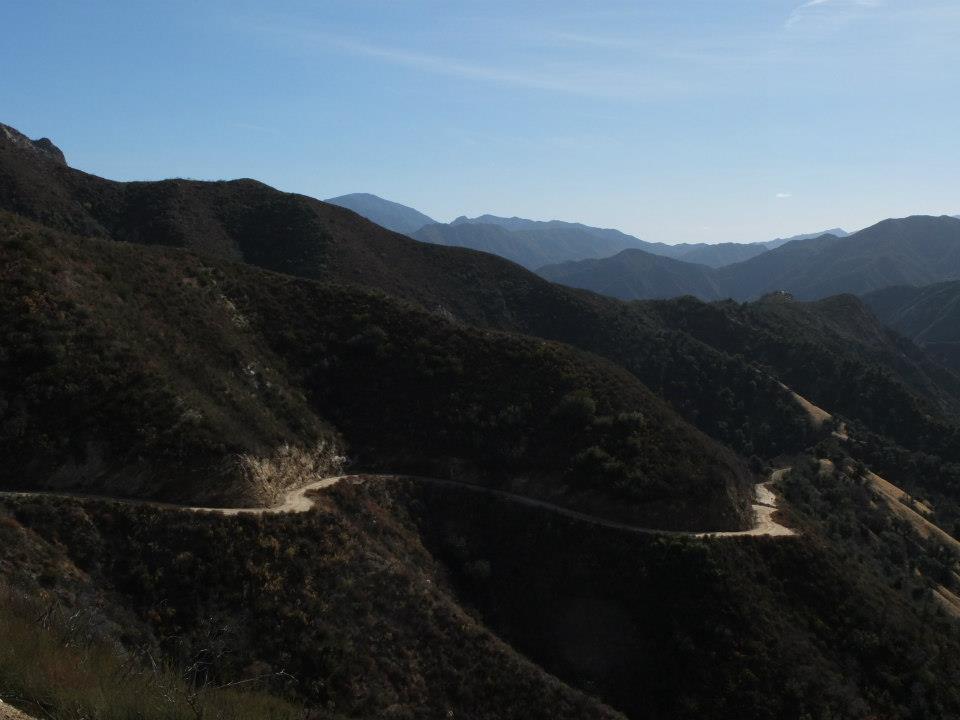
Tassajara Hot Springs is not an easy place get to.  You head inland from Highway One up the valley of the Carmel River until the road narrows and starts to wind.   Then you keep driving, slowly climbing through miles of sparsely-settled ranchland, until just about that point where you start to head down again toward the towns of the Salinas Valley, where you take a right turn.  And that’s where the journey really starts.  After a mile or two the pavement ends, and you start climbing again, steeply this time, for five or six miles and 3,000 feet to the top of Chew’s Ridge, where you can see the granite peaks of the Santa Lucia Mountains all around, and then you start down.  Down and down the steep side of a deep canyon, for another five more narrow, twisting, dusty miles, until the road ends at the front gate of a Zen Buddhist monastery, on the site of an old hot springs resort on Tassajara Creek.
 It’s the perfect kind of place to hide out from the world.  I was living there when the First Gulf War started in early 1992, and somehow the United States Selective Service Board got my address, and sent me a letter.  It said that I had thirty days to register for the draft or they’d refer my case to the Justice Department.  But I wasn’t really worried.  Somehow I just couldn’t see the FBI making the trip to Tassajara to knock on my door.  It was also the perfect refuge for a young man who’d spent twenty-odd years playing hide-and-go-seek with Jesus.  Or so you would think.  I was at the bottom of a canyon at the dead end of a dirt road in the middle of a wilderness, with no one around for miles but Buddhists.  Every day from 4:00 in the morning to 9:00 at night I was doing Buddhist practices and studying Buddhist texts, wearing Buddhist clothes, and eating Buddhist food.  But it was there that Jesus caught me.  It was there that I finally had to stop running, and turn around to face the person that I really am.

The English words “sinner” and “repentance” are so loaded for us that it’s helpful to know something about the Greek words that they translate in our Bibles.  “Sinner” comes from a Greek word that means a person whose aim is off, someone who is missing the mark.  It implies that there is a right goal or purpose or object of desire for a person’s life.  To “sin” means simply to think or say or do something that misses the mark, because it’s directed at the wrong target, or maybe because of a simple break in concentration, or a lack of skill.   And “repentance” simply means to turn one’s mind around.  To “repent” is to turn around and face what you’ve been running from. 
The Buddha way is a path of wisdom and compassion, and I’m a better person for the years I spent following it.  But it’s not my path.  And that only became clear when I was given the chance to get onto it all the way.  When I was at Tassajara the abbot of the monastery offered to ordain me a priest, giving me the chance to dedicate my life to studying and practicing and teaching in that tradition.  It was only then that I could see that my shot was off the mark.  It was only then that I could finally see that I had just been playing Buddhist, and I’d been running from my real life’s work and the truest longings of my heart.  

As conversion stories go, I don't mind saying it’s a pretty good one.  But it’s not nearly as good as Paul’s.  Paul’s turnaround, from enemy and persecutor of the church to tireless missionary and apostle of Christ, is the great Christian story of repentance.  Because if anyone ever should have been immune to the grace of Jesus Christ, if anyone ever was constitutionally incapable of admitting he was off the mark, if anyone ever deserved to be given up for lost, it was him.  If this man, the foremost of sinners, could be proved faithful and appointed for the service of God, then is there anyone at all of whom we can say, “don’t even bother with that one.”  “He is too far gone.”  “She will never change.”
   
Which is a pretty hopeful message, and it’s hard not to notice the contrast between that hope and the gloom and doom that we find in today’s reading from Jeremiah and the Psalms.  One way that people in the church have traditionally tried to explain that contrast is as the difference between the angry and vengeful God of the “Old Testament”, and the forgiving and compassionate God of the New.  But there’s something a little self-serving about that interpretation, and it’s not, strictly speaking, accurate.  There are plenty of scriptures in the Hebrew Bible that praise the patience and long-suffering love of God towards his people, and lots of places in the Greek Bible that talk about God’s wrath and the well-deserved destruction of sinners.
I think it’s more helpful to talk about collective and individual understandings of sin.  We’re used to hearing the harsh judgments and curses and threats of people like Jeremiah as if they were talking about our behaviors and our mistakes as individual persons.  But that’s not exactly what they meant.  The prophets were social critics, or, as one author I read recently put it, dissident public intellectuals.  They spoke on behalf of the God who had called his people out of slavery and led them through the wilderness and given them a holy and righteous law.  He’d driven out other nations before them and settled them on their own land.  He had made a dwelling place for his name among them.  The prophet gave voice to the hurt and the anger of God that now that whole people was missing the mark. 
The violence of the prophet’s language is directed against a false sense of security.  His harsh cry pierces through the soothing noises of the official spokespersons and dispensers of conventional wisdom, who love to say that nothing bad can happen to God’s chosen people.  But the prophet says the people are deceiving themselves, because they have forgotten the real purpose for which God chose them, and he threatens the worst if they don’t remember it.  They need to stop running, and turn around and face the truth, the truth about their indifference to the poor and their corruption of justice, the truth about their idolatrous worship of wealth and power, and the institutionalized violence of their society; the truth of their weakness and duplicity on the international stage.  They need to face these things because only then will they be found by the real God, the God whose covenant was to make them a nation where such things don’t happen.
The Jews remembered the words of Jeremiah because they came true.  They treasured them, because after their temple had been burned, and their city destroyed, and they’d been carried away into exile in Babylon, those words said that the horror that had befallen them was not some cruel joke of history.  It was not meaningless, but it was the consequence of their betrayal of God’s covenant with them.  And if this catastrophe could be a moral and religious lesson, then maybe they could learn it.  Maybe they could still repent, and if they did, maybe they would find that God had not abandoned them.  Maybe He would seek and find them, even in the land of exile, even without their temple and their sacrifices.  Maybe they weren’t really lost.
In the 3rd Chapter of Genesis, after Adam has eaten the fruit of which it was forbidden to eat, God comes looking for him in the garden, calling out “Where are you?”  And the man answers “I was afraid, because I was naked.  So I hid.”  This story, which is so foundational for Judeo-Christian ethics, has both personal and collective interpretations.   But either way, it suggests that the only remedy for our constant failure to hit the mark is the goodness of God, the patience of God, the persistence of God in seeking and finding us.  We can’t will ourselves to be perfect.  Half the time we don’t even understand what we’re doing.  But we can start to break the habit of running and hiding.  We can learn a new habit, that of stopping, and turning around.  We can learn to admit that we’re naked, and allow ourselves to be found. 

Sunday, September 8, 2013

The choices of discipleship


After I graduated from seminary my first job offer was from All Saints’, Carmel, and it included a place to live as part of the deal.   Griffin House was a quaint little cottage next door to the church, but it needed a lot of work before my family and I could move in.  So while we were waiting for that to be finished, we lived on the grounds of the church itself, in an old carriage house they used to give to the Sexton.  It had one room upstairs, about 15 by 20, with a small kitchen and a smaller bathroom, and a semi-finished basement below.  We slept downstairs, surrounded by our furniture and stacks of unopened boxes.  And when it rained, which it did a lot that winter, we would run outside in our pajamas, carrying the baby around the corner of the house and down the dark stairs under the pouring eaves.  The walls were made of a single thickness of redwood planks, and in the worst of the storms the roof leaked and the whole house creaked and swayed, filled with sounds of the falling rain, and the wind in the trees, and the thunder of the ocean at the bottom of the hill.
On a Saturday morning at the end of January a party of folks from the congregation came and helped us move the hundred feet into Griffin House.  The part-time interim pastor started work the following Sunday, and he and his wife stayed in the carriage house a couple of nights a week while they were in town.  Later, when the parish called a new Rector, he and his wife agreed to live there, too, for the time being.  How long “for the time being” would be was never specified.  Well, as it turned out, and this is my point in telling this story, “for the time being” was until we left Carmel to come to Petaluma, three year later.  For three years the Rector and his wife chose to live in the carriage house, which they renamed “The Chalet,” while his junior associate lived right next door in the three-bedroom cottage. 
You could say it was a smart decision.  If he had pushed us back into The Chalet so they could live in Griffin House, it wouldn’t just have caused hard feelings between my family and his.  It also would not have sat well with many in the congregation, who were very fond of us, and whose trust and affection they had still not won.  But even if their decision involved some measure of calculation, it was still a remarkably generous act.  It came at a real cost.  The Rector and his wife looked at what they stood to gain by cementing caring and trusting relationships with me and my family and with the All Saints’ congregation.  They took stock of what it would cost them, and they decided that three years in The Chalet was a price they could afford to pay. 
Our second reading today is the text of a letter from the apostle Paul to a well-off fellow and patron of a house church whose name is Philemon.   The subject of the letter is Onesimus, a slave who used to be part of Philemon’s household, but who ran away and who now has met up with Paul, and has himself become a Christian.  The exact location and circumstances of all of this are unknown, but Onesimus apparently has been a great help and comfort to Paul, who is in prison.  But now Paul has decided that Onesimus should return to his old master.    In the letter that Onesimus carries with him to Philemon, Paul is not shy to claim his rights as an apostle and spiritual father.  He points out that Philemon himself owes Paul a great debt, for without him he never would have received the promises of God in Christ’s New Covenant of grace.  So from one point of view Onesimus has still been working for Philemon at a distance, since the service he gives to Paul is a proxy for what is rightfully owed by his master.     
But Paul does not insist on his rights because he wants Philemon to do the right thing, not because he is Paul’s underling in the Christian pecking order, but as a free and responsible man.   Paul gives up the one who has become like his son, and Onesimus gives himself up, too, or this letter would not have survived.  The two of them pay this cost for the sake of the new relationship they hope to gain with Philemon.  By giving away their rights, they are asking Philemon to do the same.  Their hope is that he will decide what to do as a disciple of Jesus Christ, that he will choose the life of that new people of God in which there is no longer male no female, Jew or Gentile, slave or free.  Paul challenges Philemon not just to take back his runaway slave, not only to forgive him, and set him free, but after that to live with him as an equal and a brother in the Lord.  
When Jesus says in the Gospel that no one who does not hate father and mother, wife and children, brothers and sisters, and even life itself, can be his disciple, this gets our attention.  It’s a way of talking that is meant to break into the comfortable place of our usual way of thinking, to tell us that the circles of relationship we draw around ourselves are too small.  When we only have concern and responsibility for our own lives and the members of our immediate families we aren’t doing justice to the mission of Jesus, a mission to bring healing, and forgiveness, and freedom, and the full dignity of human life, not just to us and the people we love, but to everyone. 
It’s a mission Jesus invites us to share, but this doesn’t mean we have to take responsibility for the whole job.  That is God’s work, in and through Christ, to whom be all honor and glory and thanksgiving and praise.  But we do have our part to play.  We do have our choices to make.  And Jesus wants us to know that those choices are often costly, not because God demands a penalty for our sins, but because it’s not easy to transform relationships.  It hasn’t been easy to transform the relationship of former slaves and slave master in this country into one of equality and mutual love.  It has been costly, and maybe the full cost has yet to be paid.  It’s been costly to transform relationships between men and women in our society so that the work of keeping the households, and nurturing the children, and producing the goods, and making the decisions is equitably shared.   The statistics on violence against women say that this cost is still being paid, and the relationships still are not transformed.
These kinds of transformations are not first and foremost a question of public policy, but of personal relationships, and individual decisions to pay the necessary cost.  Knowing about the work that many of you do every day—parenting children with special needs, or just plain parenting; supporting families where there are disabilities, or mental illness, or where someone is dying; as educators, and advocates, and artists, and employers; as partners in interracial marriages, or interfaith marriages, or just marriages, period—I know that you have made and continue to make costly choices.  Some of them might not feel like choices at all, but we always have a choice, even if it’s just the choice to keep showing up.   
And what makes these the choices of discipleship is the hope that they will contribute in some way to the transformation of all our relationships.  That hope is founded on the difference that it makes to know the cost that God was willing to pay in giving Jesus to us.  It makes a difference to know what we did with that gift.  It makes a difference to know that in spite of what we did, God gave him back to us alive, for no other purpose than to send us after him, as bearers of his mission.  When this story of God’s transformed relationship with us shapes our own accounting of gains and losses, when it becomes good news that we tell with our own costly choices, then we can say that we are carrying our cross, and that we are Christ’s disciples.

About Me

My photo
Petaluma, California, United States
I am a priest in the Episcopal Church, and have been (among other things) an organic farmer and gardener, and a Zen monk. I have a lifelong interest in social and spiritual renewal on the basis of contemplative discipline, creative nonviolence, and ecological practice. In recent years my work has focused intensely on the responsibility of pastoral ministry in the humanistic, evangelical, and catholic branch of Christianity known as Anglicanism. I'm married with a daughter, and have three brothers and two parents.