Showing posts with label conversion. Show all posts

Tuesday, July 28, 2015

Sharing God in abundance


Our vestry, the Board of Directors of our church, has been studying a book about the changes in religious attitudes and cultural patterns that have fewer and fewer people interested in what they think the churches have to offer.  At our meeting the other night, we were sharing stories and observations around the table about these changes as we experience them in our own neighborhoods and families, and one member of the vestry talked about a conversation with her daughter who said to her “why would I go to church?  I don’t need to go to some building to find God—to me God is everywhere.”  And she’s right, of course—God is everywhere, available to everyone, all of the time.   
During our long centuries of cultural dominance the message of the church to the world has been an accusation: “we have God and you don’t.”  The reply of the church to that daughter of the vestry member would have been, “no—the God you experience for yourself and relate to any time you want is not the real God.  It’s probably the Devil.  Our panels of experts decide what is, and is not, allowable religious experience.”  People who said publicly that you don’t need the church to find God, but that God is everywhere, all the time, for any one were considered dangerous.  They were excommunicated and persecuted and even burned for saying it.
But, thankfully, fewer and fewer people are willing to accept that anymore.  Today people recognize that nothing could be more preposterous than the notion that God is a scarce commodity.  Nowadays, anyone can rent an auditorium in an office park and call themselves the Divine Light Worship Center, and set up a light show and a pop band and an espresso cart in the lobby.  Today, you can browse at your leisure in an overstocked spiritual emporium, filling your cart with this Buddhist meditation and that Native American symbol, and it’s all good.  You can choose what seems to suit your sensibility and lifestyle and leave the rest behind.
This approach to religion mirrors the individualism of our culture, and our growing social fragmentation.  Because the unspoken corollary to “I find God on my own—however, wherever and whenever I want to,” is “you go have your God and leave me alone to have mine.”  I’m not going to tell you that this is wrong.  But I can say with conviction that it is not biblical.  The Bible is full of descriptions of sublime personal encounters with God.  One thinks of Abraham hearing the call to leave the land of his fathers and set out on a great journey, of Moses turning aside from the path to see a bush that burns without being consumed, or Saul of Tarsus struck blind by a great light on the road to Damascus.  But in every case, the import of these experiences is not individual but collective. 
Outside of a few of the Psalms, the Bible has very little interest in private religious experiences of personal illumination and consolation.  But it is very interested in experiences of conversion that turn a person into a leader, who summons others to share God’s vision of a transformed community.  The great and fundamental confession of the biblical faith is not “I have my God, now you get yours”, but “Hear, O Israel, the Lord our God is One.” 
This is the God of Jesus.  God sent Jesus to be a leader, to connect people across barriers of isolation and bring them into a new communion with God and with each other.  His mission was not to accuse the world—“I have God and you don’t”—but to ask it a question: “What could happen if we shared God together?”   [Repeat].  He put that question to those who had been pushed out to the margins and excluded from the sphere of blessing and holiness, and he put it to the elites who guarded the places of access to sacred power.  Jesus didn’t demand that people submit to his authority.  But he did ask them to imagine how they would be different if they could see the authority of God already here, present among us now, inviting all of us together to create in God a community of justice and love, of sharing and forgiveness. 
Jesus didn’t just talk about these things.  He showed people what it looks like by sharing with them at the most basic level.  Anyone who has carried a lunch tray through a crowded high school cafeteria, anxiously looking for a place to sit, knows the role that sharing a table plays in defining social rank and belonging.   But Jesus subverted the conventional norms about all that by eating with anyone.  It was one of the things that drove his critics crazy about him—“This man welcomes tax collectors and sinners,” they said, “and he eats with them.”
 I see this aspect of Jesus’ ministry in the background of the Gospel stories about the feeding of a great crowd.  I think the real miracle in these stories is not the multiplication of bread and fish.  It is that 5,000 individuals, each one of whom had come looking for Jesus out of his or her own need, jostling against each other, vying to be the first to get his attention—this crowd sat down together on the grass and shared a common meal; at least for a moment, they became a community.
They shared the miracle of the abundance of God, that not only is available to everyone, everywhere, all the time, but is also what makes it possible for us to get over our fear and suspicion and rivalry with one another and live together in unity and peace.  It was a powerful shared experience for those 5,000 people, and I think that when the church is at its best it gives people that kind of experience.  It’s something you can’t have by yourself: an experience of belonging, of being part of something, part of a people that are on a journey together toward a common homeland where they won’t exploit and oppress and deceive and slander, and commit violence against each other anymore.  It’s an experience that changes the way people see themselves in relation to the existing power structures in world.  Which is something the Gospel clearly understands—why else would it say that after the banquet the crowd tried to seize Jesus and make him their king?
He wouldn’t let them do it, but not because his leadership was “spiritual” and not political, but because they’d misunderstood what he had just showed them about the way power works in the Kingdom of God.   Because you can’t point to any one place in the story and say, “here is where the five loaves and two fish became enough to feed a multitude.” Was it when the little boy came forward with his little bit of food?  Was it when Jesus took it and said the prayer of thanksgiving?  Was it when he broke the bread and passed it out to the crowd?  Was it when they received it, and handed it around? 
This isn’t a story of Jesus showing off his power, so people will become dependent on and submissive to him.  It’s an illustration of what can happen when we trust enough to share the blessings of God together; God, the Letter to the Ephesians says, “whose power working in us can do abundantly far more than we can ask or imagine.”  This is the divine power that we worship, and put at the center of our common life as Christians.  It is the power that makes the bread and wine become the Body and Blood of Christ.   But where is the transformation—in the bread and wine or in the people who eat and drink them?  And when does it happen?  When the priest says the Eucharistic Prayer?  When the little bell rings?  When the bread is broken to be shared?  When it’s given out, or when we receive in our hands, or in our mouths?
It’s a mystery.  Difficult to comprehend, even harder to communicate, especially to someone who hasn’t been there, and has no idea what it’s about.  And yet this is the power that can disarm the forces of human self-destruction and save the world.  So I don’t think we really have a choice except to try to share it.  At least we know now what’s not going work—“We have God and you don’t.”  So let’s get up, and dust ourselves off and try again, this time with a question, Jesus’ question: “What could happen if we shared God together?”  I say we make more of an effort to ask that question, explicitly and implicitly, with words and with actions.  Let’s ask it of ourselves, and of our neighbors and our old enemies.  Let’s ask it with as much courage and creativity as we can muster, and let’s see.

Tuesday, March 17, 2015

Something to do with Jesus


I’ve been leading a class for the past six weeks or so on a book called the Wisdom Jesus.  It puts forward an image of Jesus as a teacher of the way of inner transformation that leads to higher consciousness.   A lot of people have responded very positively to this book, and the attendance at these classes has been the highest of any I’ve done at St. John’s.   We’re now in part 3, which presents contemporary approaches to ancient wisdom practices—some things you can actually do to follow in the way that Jesus taught.   And we’ve been spending a good part of each class doing these practices—not just talking, for instance, about Centering Prayer meditation, but practicing a twenty minute period of silent meditation together, and then having a conversation about our experience.
Last Sunday we did a form of Lectio Divina, a traditional way of slowly and sensitively digesting the scriptures.   And through the week as I was preparing to teach the class, I came back a few times to the problem of which scripture to pick for us to read.  I thought in passing about some personal favorites, but I didn’t have a lot of time to spend on making this decision, so, finally, I decided the best thing would be to just go to the Lectionary Page and write down the chapter and verse numbers of the Gospel lesson for the following Sunday, and read that. 
So that’s what we did.  We sat and meditated for a few minutes and then a volunteer read aloud the same verses from John that I just read to you this morning.  Now keep in mind, this group has been buzzing with enthusiasm for weeks about a portrait of a Jesus who is not exclusive, one who teaches a wisdom that is quite compatible with that of other traditions.  This is a Jesus who does not appeal to an external, dogmatic authority, but to our own inner capacity to recognize the truth.  But here we have one of those Gospel passages that seems, on the surface at least, to defy every attempt to make it universal.  So I have to admit I was a little nervous about how this was going to go. 
As it turned out, I need not have worried.  As we listened to the reading a first and then a second time, we did hit the uncomfortable verses.  And we could have seized up, and forgotten to listen to the rest of the reading because we were stuck, back arguing with verse 18.  But we stayed with it.  We stayed still and kept breathing, and trying to hear what the passage might be trying to tell us.  And when we started sharing what we’d found, it turned out there was a lot.  There was a lot in this passage that spoke to people’s hearts, that stirred their love and their longing for God.  So it is in that spirit of the faith that if we keep working, and look deeper, we will find there is more to these texts than at first meets the eye, I want to circle back now and take another look at the things about this reading that are hard to hear and hard to understand. 
 
After all, Jesus himself introduces this saying by telling us it will be a tough one to swallow.  He does this when he brings up the serpent in the wilderness.  As we heard in the reading from Numbers, Moses makes a bronze serpent as a kind of medicine that heals by making you look at the thing you are most afraid to see.   And Jesus says things in this passage that we don’t want to look at, things that might turn and bite us with a poisonous sting.  First he gives this incredible that about the grace of God, who loved the world so much, and who sent his Son not to judge the world but to save it.  But then he starts to talk about condemnation.  “Those who believe in him are not condemned,” it says, “but those who do not believe are condemned already.”  I quoted this passage at a talk I gave last fall, at an interfaith panel on peace and nonviolence, in order to illustrate a paradox that has been at the heart of the Christian religion throughout its history, and when I read those words, the Muslim Imam who was also on the panel winced and shook his head.    
Now some might say, “who cares?”  To them this passage is simple to understand: our religion has the right beliefs, and everyone else’s has the wrong ones.  We will be saved, they will be condemned, and its just too bad for them.  But a brief look back at our history tells us all we need to know about the poisonous snakes that lie along that path—wars of conquest and wars of religion, witch trials and inquisitions, pogroms, and genocides.  In a world of religious pluralism, especially in a place like California, where Jews and Christians, Muslims and Hindus, and Buddhists and Sikhs, Neo-pagans and Atheists all live side-by-side, this interpretation has lost its credibility—especially for the young, who have no memory of life in an ethnically and religiously homogenous community, and no desire to go back there. 

Because it’s no longer credible to say that the Christian church is in sole possession of the truth, even about religion.   We know too much about the world’s other faiths to continue to pretend that they are all false and misleading paths that take people to hell.  Even if their practices and doctrines seem alien to us, we can’t ignore the evidence of their saints.  People hear the Dalai Lama say “my religion is kindness” and they compare it with the self-righteous sectarian contempt preached in so many churches every Sunday.  Needless to say, it's not a favorable comparison.  So if we believe that God so loved the world that he gave his only Son, who came into the world not to condemn it, but that the world might be saved through him (and I take my stand on the position that the world needs, more than ever, people who believe this), we have to start see how that might be true exactly because it doesn’t require that everyone convert to Christianity.
That means having a different kind of faith, one that is broader than we’ve had before, but also deeper.  It means having an imagination of what God is doing in the world in Christ that is no longer limited to what happens in churches, or with people who profess the Christian faith.   And it means embracing a new kind of Christian discipleship, one that is less defined by our belonging within the rigid boundaries an exclusive social group, where people think and act and look more or less the same.  It means being less concerned with believing the right things, and more with doing what Christ is asking of us to help him save the world.
I think that’s actually more in line with what the Gospel means by “believing,” anyway.  The Greek word that our Bibles translate as “believing in” Jesus doesn’t just mean “accepting as true certain ideas about him.”  It means to put our trust in him, to trust him enough to let him change the way we live.  Believing in Jesus means following his lead, doing the things he said to do.  And today’s text emphasizes that point very strongly.  “The light has come into the world,” it says—not into the church, you notice, or into the hearts of Christians—“and the people loved darkness rather than light because their deeds were evil.  “But those who do what is true, come to the light (they come out into the world), so that it may be clearly seen that their deeds have been done in God.”   The truth, says the Gospel, the truth that really matters, is not something that you think, or something that you say, it’s something that you do.

Monday, September 16, 2013

Lost and found


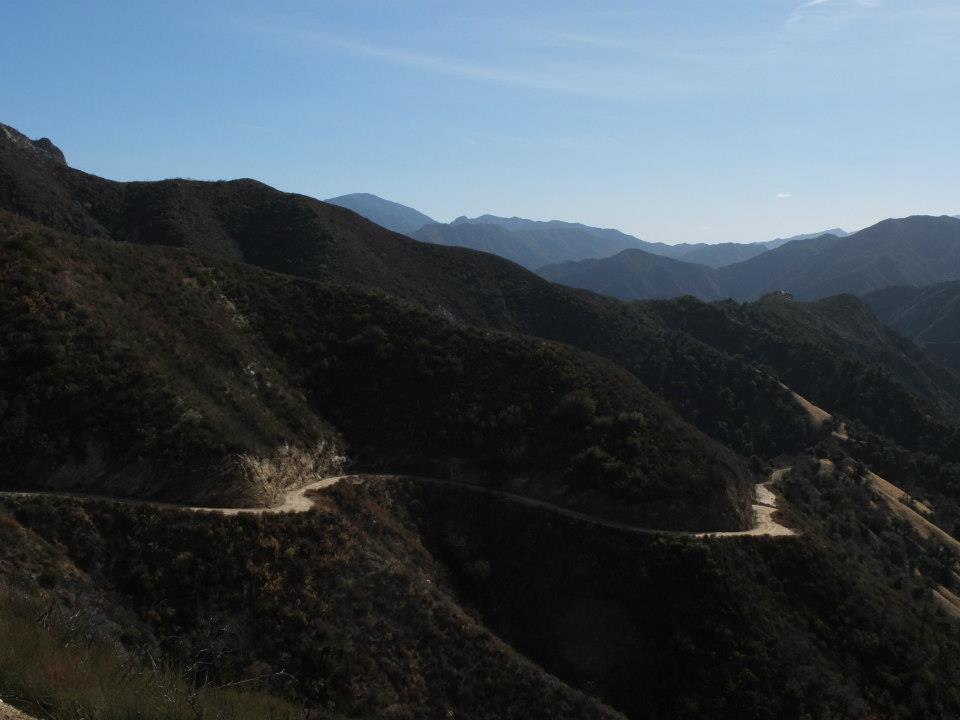
Tassajara Hot Springs is not an easy place get to.  You head inland from Highway One up the valley of the Carmel River until the road narrows and starts to wind.   Then you keep driving, slowly climbing through miles of sparsely-settled ranchland, until just about that point where you start to head down again toward the towns of the Salinas Valley, where you take a right turn.  And that’s where the journey really starts.  After a mile or two the pavement ends, and you start climbing again, steeply this time, for five or six miles and 3,000 feet to the top of Chew’s Ridge, where you can see the granite peaks of the Santa Lucia Mountains all around, and then you start down.  Down and down the steep side of a deep canyon, for another five more narrow, twisting, dusty miles, until the road ends at the front gate of a Zen Buddhist monastery, on the site of an old hot springs resort on Tassajara Creek.
 It’s the perfect kind of place to hide out from the world.  I was living there when the First Gulf War started in early 1992, and somehow the United States Selective Service Board got my address, and sent me a letter.  It said that I had thirty days to register for the draft or they’d refer my case to the Justice Department.  But I wasn’t really worried.  Somehow I just couldn’t see the FBI making the trip to Tassajara to knock on my door.  It was also the perfect refuge for a young man who’d spent twenty-odd years playing hide-and-go-seek with Jesus.  Or so you would think.  I was at the bottom of a canyon at the dead end of a dirt road in the middle of a wilderness, with no one around for miles but Buddhists.  Every day from 4:00 in the morning to 9:00 at night I was doing Buddhist practices and studying Buddhist texts, wearing Buddhist clothes, and eating Buddhist food.  But it was there that Jesus caught me.  It was there that I finally had to stop running, and turn around to face the person that I really am.

The English words “sinner” and “repentance” are so loaded for us that it’s helpful to know something about the Greek words that they translate in our Bibles.  “Sinner” comes from a Greek word that means a person whose aim is off, someone who is missing the mark.  It implies that there is a right goal or purpose or object of desire for a person’s life.  To “sin” means simply to think or say or do something that misses the mark, because it’s directed at the wrong target, or maybe because of a simple break in concentration, or a lack of skill.   And “repentance” simply means to turn one’s mind around.  To “repent” is to turn around and face what you’ve been running from. 
The Buddha way is a path of wisdom and compassion, and I’m a better person for the years I spent following it.  But it’s not my path.  And that only became clear when I was given the chance to get onto it all the way.  When I was at Tassajara the abbot of the monastery offered to ordain me a priest, giving me the chance to dedicate my life to studying and practicing and teaching in that tradition.  It was only then that I could see that my shot was off the mark.  It was only then that I could finally see that I had just been playing Buddhist, and I’d been running from my real life’s work and the truest longings of my heart.  

As conversion stories go, I don't mind saying it’s a pretty good one.  But it’s not nearly as good as Paul’s.  Paul’s turnaround, from enemy and persecutor of the church to tireless missionary and apostle of Christ, is the great Christian story of repentance.  Because if anyone ever should have been immune to the grace of Jesus Christ, if anyone ever was constitutionally incapable of admitting he was off the mark, if anyone ever deserved to be given up for lost, it was him.  If this man, the foremost of sinners, could be proved faithful and appointed for the service of God, then is there anyone at all of whom we can say, “don’t even bother with that one.”  He is too far gone.”  She will never change.”
   
Which is a pretty hopeful message, and it’s hard not to notice the contrast between that hope and the gloom and doom that we find in today’s reading from Jeremiah and the Psalms.  One way that people in the church have traditionally tried to explain that contrast is as the difference between the angry and vengeful God of the “Old Testament”, and the forgiving and compassionate God of the New.  But there’s something a little self-serving about that interpretation, and it’s not, strictly speaking, accurate.  There are plenty of scriptures in the Hebrew Bible that praise the patience and long-suffering love of God towards his people, and lots of places in the Greek Bible that talk about God’s wrath and the well-deserved destruction of sinners.
I think it’s more helpful to talk about collective and individual understandings of sin.  We’re used to hearing the harsh judgments and curses and threats of people like Jeremiah as if they were talking about our behaviors and our mistakes as individual persons.  But that’s not exactly what they meant.  The prophets were social critics, or, as one author I read recently put it, dissident public intellectuals.  They spoke on behalf of the God who had called his people out of slavery and led them through the wilderness and given them a holy and righteous law.  He’d driven out other nations before them and settled them on their own land.  He had made a dwelling place for his name among them.  The prophet gave voice to the hurt and the anger of God that now that whole people was missing the mark. 
The violence of the prophet’s language is directed against a false sense of security.  His harsh cry pierces through the soothing noises of the official spokespersons and dispensers of conventional wisdom, who love to say that nothing bad can happen to God’s chosen people.  But the prophet says the people are deceiving themselves, because they have forgotten the real purpose for which God chose them, and he threatens the worst if they don’t remember it.  They need to stop running, and turn around and face the truth, the truth about their indifference to the poor and their corruption of justice, the truth about their idolatrous worship of wealth and power, and the institutionalized violence of their society; the truth of their weakness and duplicity on the international stage.  They need to face these things because only then will they be found by the real God, the God whose covenant was to make them a nation where such things don’t happen.
The Jews remembered the words of Jeremiah because they came true.  They treasured them, because after their temple had been burned, and their city destroyed, and they’d been carried away into exile in Babylon, those words said that the horror that had befallen them was not some cruel joke of history.  It was not meaningless, but it was the consequence of their betrayal of God’s covenant with them.  And if this catastrophe could be a moral and religious lesson, then maybe they could learn it.  Maybe they could still repent, and if they did, maybe they would find that God had not abandoned them.  Maybe He would seek and find them, even in the land of exile, even without their temple and their sacrifices.  Maybe they weren’t really lost.
In the 3rd Chapter of Genesis, after Adam has eaten the fruit of which it was forbidden to eat, God comes looking for him in the garden, calling out “Where are you?”  And the man answers “I was afraid, because I was naked.  So I hid.”  This story, which is so foundational for Judeo-Christian ethics, has both personal and collective interpretations.   But either way, it suggests that the only remedy for our constant failure to hit the mark is the goodness of God, the patience of God, the persistence of God in seeking and finding us.  We can’t will ourselves to be perfect.  Half the time we don’t even understand what we’re doing.  But we can start to break the habit of running and hiding.  We can learn a new habit, that of stopping, and turning around.  We can learn to admit that we’re naked, and allow ourselves to be found. 

About Me

My photo
Petaluma, California, United States
I am a priest in the Episcopal Church, and have been (among other things) an organic farmer and gardener, and a Zen monk. I have a lifelong interest in social and spiritual renewal on the basis of contemplative discipline, creative nonviolence, and ecological practice. In recent years my work has focused intensely on the responsibility of pastoral ministry in the humanistic, evangelical, and catholic branch of Christianity known as Anglicanism. I'm married with a daughter, and have three brothers and two parents.