Showing posts with label Prophets. Show all posts

Tuesday, December 8, 2015

Clear the road


Zephaniah 3:14-20
Canticle 9
Philippians 4:4-7
Luke 3:7-18

A week ago Friday we had the cable company in to the parish office to upgrade our internet service with some new hardware that is supposed to make everything move faster.  And, as always seems to be the case with these technical improvements, there were unexpected complications.  We came in on Tuesday to find that the Treasurer’s computer, which is plugged directly into the new router, was working just fine, but the computers that connect wirelessly from the other offices were unable to get internet access.  Fortunately, we had Scott the Information Technology guy coming in that day to work on another problem, so while he was at it he managed to straighten out the bugs in the wireless networking. 
At least, that is what we thought he done.  But it turns out one problem still remains, which only became apparent after Scott had gone.  You see, my laptop doesn’t only connect wirelessly with the internet router in the Treasurer’s office, it also connects to a wireless printer on the filing cabinet next to my desk, and while my computer can now communicate quite nicely to the internet, it is somehow no longer on speaking terms with my printer.   Now, I’m no geek, or at least not that kind, but I can sometimes figure these things out on my own, so I gave it a shot.  But after a couple of hours the best I could come up with was the printer’s network configuration utility telling me over and over that my computer and my printer were connected to different networks.  And as many times as I re-tried the process, entering the names of all the different wireless networks that were available, I kept getting the same result.  So I guess we’ll have to get Scott back out here again to see what he can do.

In the meantime, this image of two different, incompatible networks has stuck with me, because that is kind of like what the Gospel of Luke describes at the outset of chapter three.  First, it tells us about the network of political and religious power that dominates the world of the story it is about to tell—the Roman Emperor Tiberius, his governor of Judea, Pontius Pilate, the sons of Herod the Great, who are the proxy rulers of the Judean hinterlands, and the High Priests at the top of the temple hierarchy in Jerusalem.  It is an uneasy set of alliances that binds these men together, one that rivalry, ambition, and mistrust continually threaten to break apart, but all of them are, in a sense, on the same wavelength.  They have a common interest in maintaining the network that keeps them in power.
But these political figures are not the main players in the drama that is about to unfold.  Some of them will play minor parts in the story later, but just at the moment they are only here to set the historical stage for John, the son of Zechariah, who has no throne, no territory over which he rules, no place in the structure of empire.  John is out in the wilderness.  But it is out there in the desert that something comes to John that connects him to a network of power and information entirely different from the one we just heard about.   The word of God comes to John, just as it came to Isaiah and the other prophets who were before him, with its revolutionary message to the world.
I don’t know about you, but there are few things that frustrate me more than a computer problem.  It throws off the pace of my working routine, and puts a drain on my productivity.  I want to get it worked out as quickly as possible, and have a hard time concentrating on my other tasks until I do.  But there is no simple fix for the disruption caused by the word of God, no quick resumption of business-as-usual.  Because the message of prophets like John is that we have to repent.  We can’t just get the printer and the laptop talking to each other again, and get back to work.  There’s a stream of data we’ve been ignoring, and people we’ve never heard of, hacking into the system we thought was secure.  They say it’s time to connect to a whole different network, time to make a complete change of plan, because God is on the move. 
God is on the move, and if there’s anything more frustrating than a computer glitch it’s a traffic jam.  We will go miles out of our way, even if takes just as long to get where we’re going, if it means that at least we can keep moving.  And what John the son of Zechariah says is that God doesn’t like traffic congestion either.  God’s not going to put up with lanes closed for road construction, or blocked off for an accident, with cars slowing down to rubberneck at the scene. 
God isn’t planning to take any detours, either.  God is coming, so it’s time to clear the road.  It’s time to fill in the potholes, and shave down the speed bumps, and open the carpool lanes.   Not so that we can go where we want to more quickly and conveniently, but so that God can come speedily to save us.  And when God does come, the prophets say, we’re going to want to be ready, and waiting, to have our heads up and our eyes open and our ears pricked, ready to see the signs and hear the words of our salvation. 
I used to argue for waiting as long as possible to decorate our house for Christmas.  It isn’t a matter of procrastination, but of principle, part of my quixotic quest to preserve the religious calendar, and minimize the intrusion of Christmas into Advent.  I’m also concerned for Christmas itself, that if we bring it on too soon it would go stale before the traditional twelve days of Christmas are done.  But I am outnumbered in this opinion, as in many things at my house nowadays, and either my resistance is wearing down, or I’m just learning to pick my battles.  So yesterday afternoon I went with my family to pick out a Christmas tree. 
I did console myself with a practical rationale, which was this: the trees we usually pick up the weekend before Christmas are all dried out from sitting around the lot so long, so my thinking is that if we get one now, cut a little off the bottom of the stem and kept it watered, it may actually last longer into the Christmas season before it starts turning gray and dropping needles all over the floor.  I guess we’ll see.  And I can report that, in a small victory for my side, we agreed not to decorate the tree immediately.  So for the time being it is standing in its pot of water in the corner of our living room, dark and fragrant, waiting.  Which, as it is, now strikes me as a beautiful symbol of Advent.   So I’m secretly hoping I can stall for a little more time before we pull out the lights and the box of cat toys, otherwise known as ornaments.
But I also have to admit to experiencing something yesterday that took me by surprise, which was that as were out and about getting the tree we saw many other families in the tree lots, doing the same, or driving home with trees in the backs of their trucks or on the roofs of their cars.  And here and there in our neighborhood they were out in their yards, stringing lights on the eaves, and hanging shiny objects on shrubs and doors and fences.  And I had the happy sense of taking part in a collective ritual, two weeks too early though it may have been, a ritual of getting ready.   Which is, after all, what Advent is supposed to be about—getting ready—so I’m not going to say that it’s wrong.

But the prophet in me still does have to ask—what is it we are getting ready for?  Are we simply hanging the scenery, gathering the props, and assembling the costumes, for an annual performance called Christmas, in which we will be the actors and the audience?   If that were the case, would not Tiberius Caesar and Pontius Pilate, Herod, and Caiaphas, feel right at home?  Or are we preparing for something far more beautiful and dangerous, something announced by a strange voice crying out in the wings of the stage—the entrance of God?         


Tuesday, February 25, 2014

Love like God's


When Jesus proclaimed the Kingdom of Heaven, he was saying that, all appearances to the contrary notwithstanding, God is alive.  He was saying that God’s revealed vision of a community shaped by the laws of God to be like God, a community of justice, generosity, compassion, integrity, and love, was his vision, and that he was acting to realize it decisively.  He called anyone who would listen to embark on the journey to a new life of God-likeness.  And he gave them a way to follow that would lead them to that life, when he summed up the whole of the Jewish law and the prophets in a simple statement: “Love the Lord your God will all your heart, with all your soul, with all your mind, and all your strength; and love your neighbor as yourself.”  But the way of Jesus went further.  In his teaching, and in all he did up to and, especially, his death, he urged us to the greatest love of all, the love that is ardent as the sun and indiscriminate as the rain, the love that is perfect like the love of God.  Jesus said, “love your enemies.”
In this teaching, Jesus confirms the message of the great Hebrew prophets who said that God is patient, merciful, and kind not just to Israel but to every nation, that every human being is a child of God, with the promise of a place at the table in God’s Kingdom.  And Jesus insists that this commandment is not for some future day.  It is not a utopian ideal, waiting for the world to change so it can go into effect.  The world begins to change now, says Jesus, because we, in our present circumstances, begin to love as God loves.
And what were the present circumstances of Jesus’ audience when he said to them, “Love your enemies and pray for those who persecute you”?  They were the daily realities of foreign occupation and colonization, of economic globalization, of mounting inequality and social control enforced by military rule.  It was a world where your superiors would strike you across the cheek with the back of the hand to humiliate and put you in their place; where crushing taxation and exorbitant rates of interest were pushing you into destitution, and a creditor could bring a poor man to court and demand his coat as security for repayment of a loan.  It was a world where a Roman soldier had the right to impress anyone on the road into service, to carry his 85 pounds of gear the distance of one mile.
And what did Jesus advise them to do under these circumstances?  Well, he told them not to have any illusions, but to recognize evil when they saw it.  But he also told them not to oppose this evil with violence.  When Jesus says “do not resist an evildoer” the word translated “resist” is a military term, meaning to form ranks for battle opposite the enemies’ line.  Jesus wanted his listeners to remember that the persons who carried out the daily rituals of their oppression were also beloved children of God, and not to repay one evil with another. 
So if he strikes you with the backhand, offer the other cheek; if he wants to strike you again, he’ll have to use his forehand, like he would with an equal.  Or if he stands in court demanding your coat, give him your undergarment as well; he’ll see you naked, a source of shame for him and a vivid demonstration of where your debt is leading you.  Or if he makes you carry his pack one mile, carry it for two, an act of voluntary friendliness that might just make him wonder if you really are a beast of burden.*   Jesus does not teach the crowd to passively accept abuse, but to disrupt the smooth operation of the machinery of evil with creative non-violent action.  Acting to reclaim the image of God in oneself, even while suffering evil, offers the doer of evil the chance to rediscover that image in himself.
When Jesus said to love your enemies, he wasn’t being sentimental.  He was speaking to people on the verge of erupting into revolutionary violence, of slipping over the edge into suicidal despair.  And he said there is a way back from the brink.  It won’t be easy.  It will involve risk, and require great courage, and patience, and willingness to suffer.  It will demand unshakeable faith in God’s love,  and its power to break down the most stoutly defended walls between people.   It calls for invincible hope in the coming of God’s Kingdom, hope even when it seems that the rule of violence will never end, even when it is clear that the struggle to break it will cost you your life.
 
On the night that Barack Obama was re-elected I listened to his victory speech.  And as he addressed a large and enthusiastic crowd of supporters in Chicago, he returned to the theme of “hope” that got him elected the first time.  He began to lay out his vision of hope for America’s future, and even though I hadn’t voted for him this time, I felt just a little moved.  There even came a point when he appeared to suggest that he might do something about the real problems facing the nation: “We want our children to live in an America that isn't burdened by debt,” he said, “that isn't weakened by inequality, that isn't threatened by the destructive power of a warming planet.”  And then he went on, in the very next sentence, to say: “We want to pass on a nation that is defended by the strongest military on Earth—but also a country that moves with confidence beyond this time of war to shape a peace that is built on the promise of freedom and dignity for every human being.”
And I remember thinking, “there it was.  That was the moment where the hope died.”   Because global military domination, even by America, will never move us to the time of peace, let alone the promise of freedom and dignity.  It’s a practical impossibility, for a whole host of reasons, economic, historical, social and political.   But the reason it concerns me, as a preacher of the Gospel, is that it’s hopeless.  Jesus knew this.  He knew the Roman imperial propaganda, with its claim to be the divine instrument of world peace, and he saw what the new world order looked like where the boots met the ground.  And he perceived that the entire project masked a deep despair.  Because the premise at the heart of all such endeavors is that there is no hope—no hope that we will ever learn to love our enemies, or that loving them will do any good; it’s hopeless, so it isn’t worth the risk or the effort.
It’s uncomfortable for me to say this.  It may be uncomfortable for you to hear it.  I may even seem to be your enemy, or worse, to be rallying you for battle.  But I’m willing to take that risk, because this year you are supposed to whether to call me as your rector, so it’s important that you know what I really think.  What’s more, if you do call me, it will be for the purpose of renewing the church.   And that is going to require love, and I don’t mean the love that is the tacit agreement not to talk about certain subjects.  I don’t mean love for our friends, or our families, or our neighbors.  I don’t mean love for our country, or even love for undocumented immigrants or the homeless people in our streets.  People can find those without this [gesture around at the church building]. 
What will renew the church is that people find a kind of love here they can’t find anywhere else, love that is perfect, like God’s--the love of our enemies.  They are going to come here because here they find the way that leads the whole world back from the brink, towards health and salvation.  If I’m elected Rector I’m going to do what I can to find that way.  Just in case you’re worried, that doesn’t mean that every Sunday sermon will be like this one.  This is only one plank of my platform.  But we will work on loving each other enough to say what we think and feel about the things that really matter, and where we have real disagreements, like foreign policy and what hymns we like to sing on Sunday morning.  We will work on loving each other enough to listen.  Not all the time—that would be exhausting.  But steadily, patiently, with faith, and hope, and love—most of all, with love.


*This exegesis of Matthew 5:38-41 is dependent on the groundbreaking work of Walter Wink.  Cf. The Powers that Be (New York: Doubleday/Galilee, 1998), pp. 101-111.

Monday, September 16, 2013

Lost and found


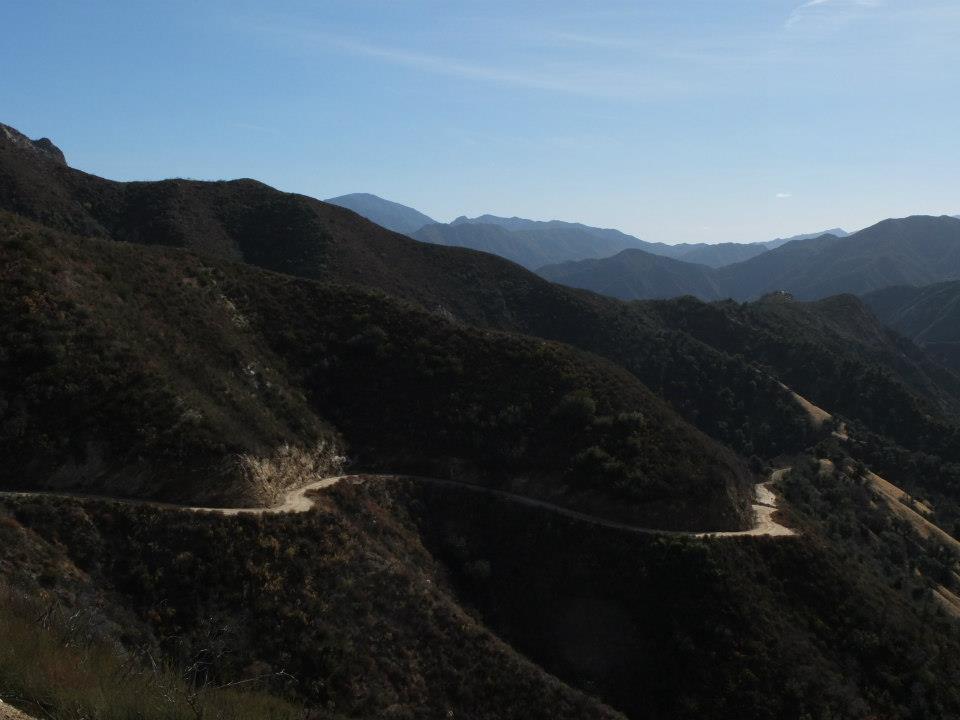
Tassajara Hot Springs is not an easy place get to.  You head inland from Highway One up the valley of the Carmel River until the road narrows and starts to wind.   Then you keep driving, slowly climbing through miles of sparsely-settled ranchland, until just about that point where you start to head down again toward the towns of the Salinas Valley, where you take a right turn.  And that’s where the journey really starts.  After a mile or two the pavement ends, and you start climbing again, steeply this time, for five or six miles and 3,000 feet to the top of Chew’s Ridge, where you can see the granite peaks of the Santa Lucia Mountains all around, and then you start down.  Down and down the steep side of a deep canyon, for another five more narrow, twisting, dusty miles, until the road ends at the front gate of a Zen Buddhist monastery, on the site of an old hot springs resort on Tassajara Creek.
 It’s the perfect kind of place to hide out from the world.  I was living there when the First Gulf War started in early 1992, and somehow the United States Selective Service Board got my address, and sent me a letter.  It said that I had thirty days to register for the draft or they’d refer my case to the Justice Department.  But I wasn’t really worried.  Somehow I just couldn’t see the FBI making the trip to Tassajara to knock on my door.  It was also the perfect refuge for a young man who’d spent twenty-odd years playing hide-and-go-seek with Jesus.  Or so you would think.  I was at the bottom of a canyon at the dead end of a dirt road in the middle of a wilderness, with no one around for miles but Buddhists.  Every day from 4:00 in the morning to 9:00 at night I was doing Buddhist practices and studying Buddhist texts, wearing Buddhist clothes, and eating Buddhist food.  But it was there that Jesus caught me.  It was there that I finally had to stop running, and turn around to face the person that I really am.

The English words “sinner” and “repentance” are so loaded for us that it’s helpful to know something about the Greek words that they translate in our Bibles.  “Sinner” comes from a Greek word that means a person whose aim is off, someone who is missing the mark.  It implies that there is a right goal or purpose or object of desire for a person’s life.  To “sin” means simply to think or say or do something that misses the mark, because it’s directed at the wrong target, or maybe because of a simple break in concentration, or a lack of skill.   And “repentance” simply means to turn one’s mind around.  To “repent” is to turn around and face what you’ve been running from. 
The Buddha way is a path of wisdom and compassion, and I’m a better person for the years I spent following it.  But it’s not my path.  And that only became clear when I was given the chance to get onto it all the way.  When I was at Tassajara the abbot of the monastery offered to ordain me a priest, giving me the chance to dedicate my life to studying and practicing and teaching in that tradition.  It was only then that I could see that my shot was off the mark.  It was only then that I could finally see that I had just been playing Buddhist, and I’d been running from my real life’s work and the truest longings of my heart.  

As conversion stories go, I don't mind saying it’s a pretty good one.  But it’s not nearly as good as Paul’s.  Paul’s turnaround, from enemy and persecutor of the church to tireless missionary and apostle of Christ, is the great Christian story of repentance.  Because if anyone ever should have been immune to the grace of Jesus Christ, if anyone ever was constitutionally incapable of admitting he was off the mark, if anyone ever deserved to be given up for lost, it was him.  If this man, the foremost of sinners, could be proved faithful and appointed for the service of God, then is there anyone at all of whom we can say, “don’t even bother with that one.”  “He is too far gone.”  “She will never change.”
   
Which is a pretty hopeful message, and it’s hard not to notice the contrast between that hope and the gloom and doom that we find in today’s reading from Jeremiah and the Psalms.  One way that people in the church have traditionally tried to explain that contrast is as the difference between the angry and vengeful God of the “Old Testament”, and the forgiving and compassionate God of the New.  But there’s something a little self-serving about that interpretation, and it’s not, strictly speaking, accurate.  There are plenty of scriptures in the Hebrew Bible that praise the patience and long-suffering love of God towards his people, and lots of places in the Greek Bible that talk about God’s wrath and the well-deserved destruction of sinners.
I think it’s more helpful to talk about collective and individual understandings of sin.  We’re used to hearing the harsh judgments and curses and threats of people like Jeremiah as if they were talking about our behaviors and our mistakes as individual persons.  But that’s not exactly what they meant.  The prophets were social critics, or, as one author I read recently put it, dissident public intellectuals.  They spoke on behalf of the God who had called his people out of slavery and led them through the wilderness and given them a holy and righteous law.  He’d driven out other nations before them and settled them on their own land.  He had made a dwelling place for his name among them.  The prophet gave voice to the hurt and the anger of God that now that whole people was missing the mark. 
The violence of the prophet’s language is directed against a false sense of security.  His harsh cry pierces through the soothing noises of the official spokespersons and dispensers of conventional wisdom, who love to say that nothing bad can happen to God’s chosen people.  But the prophet says the people are deceiving themselves, because they have forgotten the real purpose for which God chose them, and he threatens the worst if they don’t remember it.  They need to stop running, and turn around and face the truth, the truth about their indifference to the poor and their corruption of justice, the truth about their idolatrous worship of wealth and power, and the institutionalized violence of their society; the truth of their weakness and duplicity on the international stage.  They need to face these things because only then will they be found by the real God, the God whose covenant was to make them a nation where such things don’t happen.
The Jews remembered the words of Jeremiah because they came true.  They treasured them, because after their temple had been burned, and their city destroyed, and they’d been carried away into exile in Babylon, those words said that the horror that had befallen them was not some cruel joke of history.  It was not meaningless, but it was the consequence of their betrayal of God’s covenant with them.  And if this catastrophe could be a moral and religious lesson, then maybe they could learn it.  Maybe they could still repent, and if they did, maybe they would find that God had not abandoned them.  Maybe He would seek and find them, even in the land of exile, even without their temple and their sacrifices.  Maybe they weren’t really lost.
In the 3rd Chapter of Genesis, after Adam has eaten the fruit of which it was forbidden to eat, God comes looking for him in the garden, calling out “Where are you?”  And the man answers “I was afraid, because I was naked.  So I hid.”  This story, which is so foundational for Judeo-Christian ethics, has both personal and collective interpretations.   But either way, it suggests that the only remedy for our constant failure to hit the mark is the goodness of God, the patience of God, the persistence of God in seeking and finding us.  We can’t will ourselves to be perfect.  Half the time we don’t even understand what we’re doing.  But we can start to break the habit of running and hiding.  We can learn a new habit, that of stopping, and turning around.  We can learn to admit that we’re naked, and allow ourselves to be found. 

About Me

My photo
Petaluma, California, United States
I am a priest in the Episcopal Church, and have been (among other things) an organic farmer and gardener, and a Zen monk. I have a lifelong interest in social and spiritual renewal on the basis of contemplative discipline, creative nonviolence, and ecological practice. In recent years my work has focused intensely on the responsibility of pastoral ministry in the humanistic, evangelical, and catholic branch of Christianity known as Anglicanism. I'm married with a daughter, and have three brothers and two parents.