Showing posts with label crucifixion. Show all posts

Sunday, April 5, 2015

The witness


The Gospels depict Jesus in a variety of moods.  He can, of course, be gentle and nurturing, as when he says to his disciples, “Let the little children come to me.”  Or he can be angry, as when he says to the Scribes and Pharisees “Woe to you, hypocrites: you shut the door of the Kingdom of Heaven; you do not enter yourselves, and when others try to enter, you stop them.”   But the Jesus that we meet today is the one who suffers.  This afternoon we keep vigil with a suffering Messiah.  We remember his pain, and we seek in some way to share it, by our fasting, by spending these three hours in prayer and meditation on his crucifixion.
But as affecting as the story of his passion and death may be, this is not the sum total of his suffering.  The Servant Songs of Isaiah, one of which we heard read today, have profoundly shaped our experience of Jesus.  They may have formed his understanding of himself.  And they describe the servant of God as one whose vocation it is to suffer.  He is, as an older translation had it, a “man of sorrows; acquainted with grief.”
The sorrows of Jesus did not begin the night he was betrayed and handed over to his enemies.  We keep vigil with Jesus on the cross because his passion is a vigil he kept with us.  But it is the climax of a life-long vigil of compassion, in which he bore with us and our self-inflicted pain, a pain we finally turned against him.  So we acknowledge that the fact that he died in this way is no accident.  It is not a chance misfortune that befell him on the way to his exaltation as King of Kings.  We cannot simply pass it off with a callous remark, as we so often do with the suffering that we encounter every day around and within us, shrugging our shoulders and saying “shit happens.”  Instead, we make a conscious choice to open our eyes and our hearts to the sorrow and pain of Jesus.  We even honor it, venerate it, give thanks for it.  We call this day “Good Friday.”
And that is because we sense that Jesus’ crucifixion tells us something we need to know.  We come to it searching for meaning that we can’t make any other way.  Jesus endured this suffering because he knew something essential about us, and that knowledge, in itself, was already sorrow and pain.  That is why we recount and remember every detail of his betrayal and desertion by his friends, his anguished prayer in the garden, his arrest and interrogation, the mockery, the false accusations, the scourge and crown of thorns, the journey to the cross, and his agony upon it—not in order to add more and more to the account of his suffering, but because at each one of these moments his heart was breaking, not only for himself, but for us. 
The extreme physical brutality of crucifixion, and the sheer volume of pain that Jesus had to endure, is often held up before us as the measure of his love.   But these things in themselves have no redemptive meaning.  They are, in fact, business as usual in the long nightmare of history.  But what makes the cross of Christ truly sacrificial is that he accepted it willingly, and that in that acceptance he was free.  “Sacrifice” means to make sacred, and Jesus offered his suffering to God in the faith that God would make it sacred, for our sake, if not for his.  Because the God of Jesus is a God who sets his children free. 
And we are not free.  We are not free in relation to our suffering, and because of this we are not free at all.  Much as we might pretend otherwise, with our possessions and technology, with our power to mold the world to our convenience; much as we might entertain and distract and anesthetize ourselves by our endless consumption of the products of a culture of denial; much as we might seek the approval of others, or at least our selves, with flattery and conformity and productivity, all of it is so much effort wasted, trying but ultimately failing to avoid the truth that we are weak.  We are hurt.  We are lonely and dissatisfied.  We are going to die.
Jesus understood this about us.  He talked about a man who built his house on sand, and how the rain fell, and the floods rose, and the gales blew against that house, and how great was its fall.  He talked about the one who had a rich harvest and tore down his barns to build bigger ones, not knowing that the very same night his life would be taken from him.  He tried to teach us that the real measure of our worth is not our strength and self-reliance, our imperviousness to the afflictions that mar the happiness of lesser folk, or how well-defended we are from their envy and hate and slander; but it lies in our capacity to be affected, to love and be loved.  He tried to show us that our true and lasting value is in the eyes of God.
A lot of people didn’t want to hear this.  As a general rule, the more well-off and prestigious they were, the less interested they were.  Jesus captures this himself when he reports the contempt of those who say, “this man is a glutton and a drunkard, a friend of tax collectors and sinners.”  So add to his sorrow at seeing men and women trapped in useless vanity, the pain of their rejection and hostility.  And this enmity reveals a deeper and still more painful truth about us.  Because we are not in denial only about our own pain, but also of the pain we inflict on others, and the toll it takes on our own souls.
This is more than personal.  The fear and aggression that come from bracing against our vulnerability are contagious.  They pass from house to house and generation to generation.  They threaten to dissolve the bonds that hold families and communities together.  And so we develop systems of social and psychological repression, to establish and maintain order.  These systems propagate the myths and rituals that impress deeply on their members the illusion of security and peace.  The fear and aggression are still there, below the level of conscious awareness, but we channel them into organized and sanctioned outlets.  This process operates by a logic which seems self-evident to everyone.  Everyone, that is, except its designated victims, who are the only people who can see how arbitrary and irrational these systems are.
Every society has its victims—its heretics and Jews, Commies, Niggers, Chinks, Gooks, and Redskins, its illegals, Ragheads, junkies, nut jobs, and retards, its faggots and punks, its thugs, bums, and trailer trash, its bitches, sluts and hoes.  It has its rituals of dehumanization in which the suffering and death that haunts us all is meted out in measured doses against the most vulnerable of our neighbors.  The unity that comes from bonding together against a common enemy, the feeling of release that follows the catharsis of sanctioned violence—this is what passes for peace.  And only the victim knows the truth. 
Only the victim really knows how scapegoating, abuse, and lynching dehumanize the perpetrator.   Only the victim, bearing witness to her own inviolable humanity, can break the spell of sanctioned hate and violence.   That is what the word “martyr” means—witness.  A martyr is one who bears witness, in his freely accepted suffering, to the unbreakable truth of our shared humanity, our common identity as children of God.   This is the truth that Jesus received, the truth in which he reached out to the lost, the outcast and afflicted, and welcomed them as sisters and brothers.  This is the saving knowledge that he restored to them when he healed them.  It is the truth he carried with him to Jerusalem and bore witness to on the cross.
This is truth where the deepest well of Jesus’ suffering mingles with the springs of hope and joy, because the witnessing victim is the one who knows it doesn’t have to be this way.  He is the one who sees that acknowledging pain, given and received, is what opens the door to forgiveness, to reconciliation and true peace.  He is the one who can say to the people preparing to destroy him “you will know the truth, and the truth will set you free.”   He cannot force that to happen.  He can only stand fast in his own humanity, and bear his cross.  But he shows us in this way what mere words by themselves cannot convey—the hope that his sufferings are not fruitless and in vain, but are the birth pangs of a new world. 
         

Monday, March 30, 2015

Could you be loved?


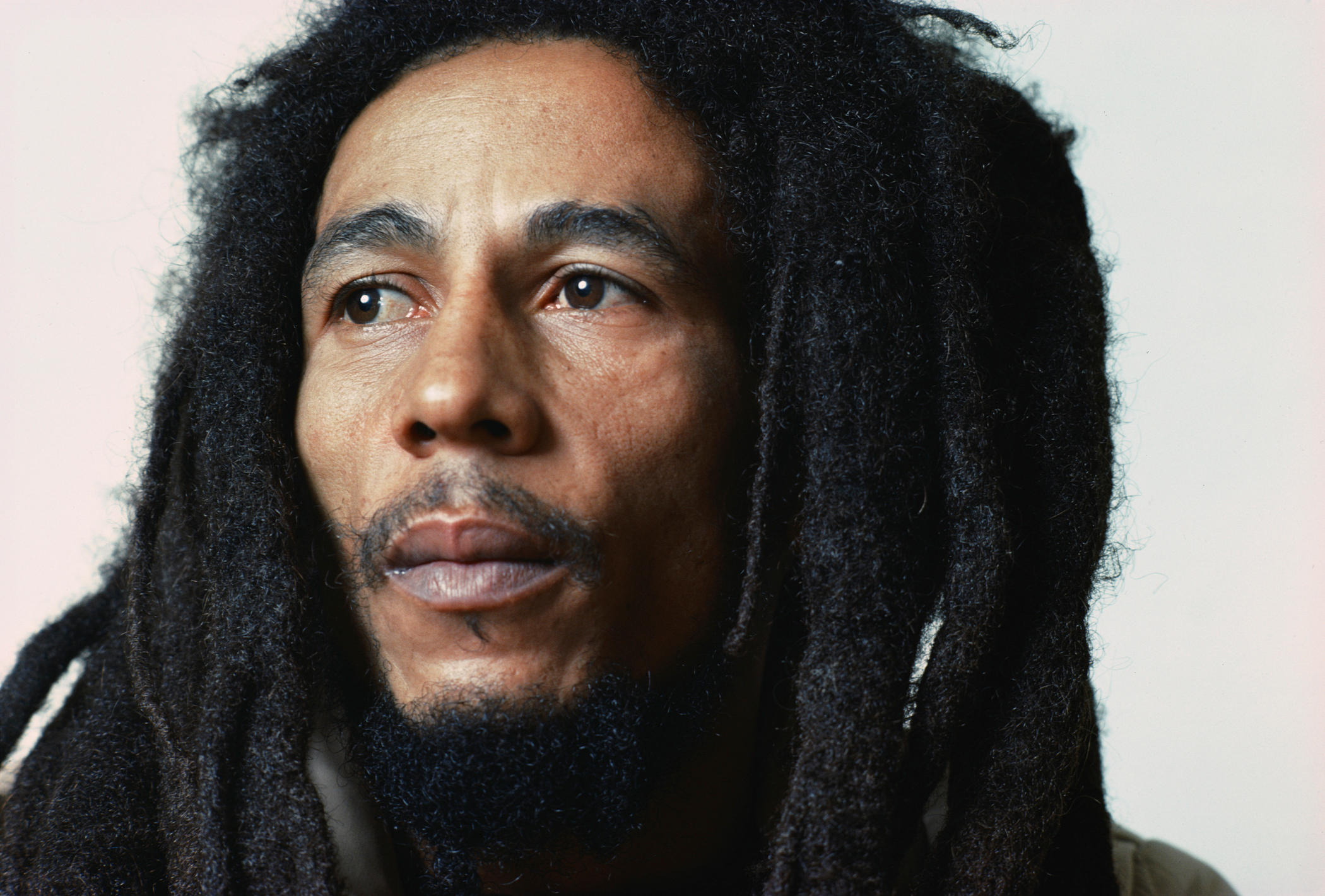
By the time I knew who Bob Marley was, it was too late.  Funny thing was, I had my chance to see him.  On November 4, 1979 he played two shows at Memorial Auditorium in Burlington, Vermont.  You can buy an original poster for the concerts for a thousand dollars on the internet.  But at the time the tickets sold for $7.50.  I was a sophomore in High School, not quite fourteen years old, and not yet in the habit of going to rock concerts.  And Bob Marley was not a rock musician, exactly.  He and his band, the Wailers, played reggae, music from the urban slums of Kingston, the capital of Jamaica, that fused American Soul, Gospel, and Rhythm and Blues, with traditional folk music from the countryside with deep roots in African culture. 
I read about that in the free weekly paper, the Vermont Vanguard, which published an interview to promote the concerts.  It was the first I’d heard of him, and I was intrigued.  But I didn’t drive yet, and neither did any of my friends; there was no bus out to where we lived, 15 miles from Burlington, and the 4th of November was a school night.  So I didn’t go, but I might have made more of an effort if I’d known then what I soon came to know.  I didn’t know that Bob Marley was a legendary live performer who was on his way to becoming a global superstar.  I didn’t know that the following year my brother Ben was going to go away to boarding school and come back for Christmas a fan. 
When I found out about that, I bought Ben a cassette tape of the album Survival and put it under the tree, but it turned out he already had it, and he gave it back to me.  I still remember putting it into a little portable tape player one Saturday morning to listen to while I did my weekly chores.  It was unlike any music I’d ever heard before, and I didn’t know what to make of it at first.  But I kept listening, and pretty soon I was playing it over and over again.  It wasn’t long after that I went over to my friend Fred’s house and discovered that his mother had a bunch of Bob Marley and the Wailers records.  So I rode my bike to Burlington the next weekend, and bought a bunch of blank cassettes, and I taped every one of those albums.  Over the following months I spent the money I earned mowing lawns at the record store, filling in the rest my collection. 
I might have made more of an effort to get to the Bob Marley concert that night if I’d known he was about to die.  I was on the staff of the high school newspaper by then, and I wrote a heartfelt obituary and we published it, bordered in black.  The chance I’d missed, to see him in person, would never come again.  But in the long run, his impact on my life wasn’t any less because of it.   Unlike most of the music I was a fan of in those days, I still listen to Bob Marley.  It makes me proud and happy that now my wife and daughter like him, too.  I guess that’s because the messages that made his songs so meaningful to me when I was a teenager still matter to me today—loving and giving thanks to God, brotherhood and sisterhood with all human beings; outrage and sorrow at violence, injustice, and war; faith in the power of truth to overcome greed and delusion; championing the right of the poor to stand up and resist their oppressors; joyful celebration of love, culture, community, and the basic goodness of life.

The Gospel of John doesn’t say whether the Greeks who came to Jerusalem for the Passover ever got to see Jesus in person.  It seems like they didn’t.  And maybe in the short run, it felt to them like a missed opportunity and a grave disappointment.  But events were moving quickly for Jesus at that time, according to a different agenda than the one those Greeks had in mind.  The time when they asked to see him was exactly the moment for Jesus to begin the final movement of his destiny.  The things that those Greeks were hoping to get from him—new insight into the working of God in the world and in their lives, a transforming experience of the power of truth and love to overcome alienation and despair—these things were about to become available to them and to everyone, in a new way that did not depend on being in his physical presence.
But in order for that to happen Jesus had to die.  Why that is, and how that works, and what that means, are questions that never go away.  They are involved with the questions about why there is so much evil and suffering in the world, and what is the purpose of human life, and why things never measure up to the potential we can see they have.  I think the church has sometimes done a disservice with its overly tidy explanations for all of this, and how it is that Jesus’ being “lifted up” on the cross speaks to the heart of the matter.  We have held these questions at a safe distance, for philosophical analysis and theological speculation, or we have smothered them with pious sentimentality. 
What is clear and indisputable is that Greeks did embrace the Gospel of Jesus, by dozens, and then by hundreds, and thousands, and hundreds of thousands.  And so did Romans and Syrians, Egyptians and Mesopotamians, Ethiopians and Arabs, and Irish and Mexicans and Chinese.  Why a religion that centers on the agonizing public execution of its founder could spread across the world like this is another puzzle that people like to try to solve.  They explain it in terms of social psychology and cultural anthropology, comparative religion and politics.   But maybe the most satisfactory explanation is the simplest one—that people simply recognize it as true.
The death of Jesus tells us something true about this world we live in and about ourselves.  It tears away the veil from the ruler of the world, revealing the terror and violence behind the lofty propaganda, idolatrous religion, and mockeries of peace and justice.  It shows us how we acquiesce to these manipulations, how we crave the security of the herd, and love to be told that we are the ones who play by the rules, and so we are the ones who deserve the rewards.   It shows us how the spirit that lays false claim to rule the world holds sway in our own hearts, seeking to be admired and honored, seeing rivals and enemies everywhere, loving to play the game of blame and shame, because the humiliation of another is the best defense against our own.  The cross is this world’s moment of truth, and as much as we might want to shrink from it, there is something in us that recognizes it for what it is.
This attracts us, because deep down we long to be free.  And the world’s captivity to sin and death is only part of the truth that Jesus knew.  The other side of the truth is that the world is worth dying for.  Because all pretensions of the false ruler of the world aside, it is God’s creation.  God, who is the only source of its life and light, loves this world and means to save it.  The Gospels tell us that the Jesus understood this and gave himself completely to the truth of it, letting the Spirit of healing, liberating, and recreating the world be his guide in all things.  It wasn’t like he wanted to be crucified, but he knew what he was up against well enough to realize that that was where he was headed.  And he was willing to go, if that was what it would take to show the world that only love and truth and faith in God can save us.
Jesus tells the crowd that “now is the judgment of this world” but that hour is always now.  He is the seed that fell into the ground and died, so that he would bear fruit in countless men and women like you and me.  He is always lifted up before us, drawing us to himself, calling us to see the true glory of the world, which is his path of love and service. The choice is always ours.
 In the immortal words of the great Robert Nesta Marley,
“Could you be loved?  Then be loved.”


Tuesday, April 15, 2014

Child's Play


The Liturgy of the Palms
The Liturgy of the Word

My daughter Risa is nearing the end of fourth grade, and this year she’s been getting homework assigned every week at school.   She’s also started taking a bigger share of caring for herself, making her own snacks, cleaning her own room.  A couple of weeks ago we adopted a kitten, at her urging, and the deal that my wife and I made with her was that it would be, officially, her pet, and she could pick out the one she wanted, and give it the name she chose, but in return, she would have to get the kitty food and water, and clean her litter box. 
And with these changes in Risa’s life our relationship with her is changing.  It used to mostly be about doing things together, but now it’s more and more about helping her do things by herself.  There’s a way in which this is a healthy, age-appropriate development, but there are also times when I feel like I’m the unwitting agent of a soulless world.  And as I function more and more as Risa’s taskmaster, helping her get there on schedule, and complete it on time, and get it done right, I am subtly reinforcing the message that these are the things that matter, and we seem to have few and fewer opportunities to play.  
Risa still regularly invites me to play.  Sometimes I accept, and we’ll wrestle, or make up a song or a story, or a silly game with rules we invent as we go along.  But as often as not I’ll say there’s still some work to do, or it’s too close to bedtime, or I’m just too tired.  There are certainly times when one or more of these things are true.  But there are also times when I’m just stuck.  I’m so used to being the grown-up who is always in charge of the situation, so identified with being the responsible parent, so focused keeping us on track toward the goal, that I get stuck in that role.  And to get unstuck, to come down from there into the intimate give-and-take, the open-ended, timeless place of play is a step I’m unwilling or even afraid to take.
    
When I think of the scene of Jesus riding into Jerusalem, I imagine that the crowd that was shouting and running along, waving palm branches, included a lot of children.  Actually, I know there were children there, because if you read on, the very next section of Matthew’s Gospel tells how Jesus went into the temple, and started driving out the money-changers and overturning the seats of those who sold doves for the sacrifices, and people came to him and he healed them.  And it says that the children were crying out in the temple, “Hosanna to the Son of David!”  The Chief Priests and the scribes came up to Jesus and said, “Do you not hear what these children are saying?” 
To these guys, shouting “Hosanna to the Son of David” in the temple is not child’s play.  It is like joking about having a bomb in your bag at the airport.  Because right next to the temple, looming over its courtyard like a hammer poised to fall, is the fortress of the Roman Governor.  Don’t say you’re the new David, the Messiah, the true King of Israel, unless you mean it, because if you’re serious, it means war.
But they were wrong about what Jesus had come there to do.  You’ll remember that at one point, when his disciples asked him who was top dog, he took a little child and put it in the middle of them and said, “Unless you change and become like this little child, you will never enter the Kingdom of Heaven.”  The children of Jerusalem may not have understood exactly what Jesus was doing that day, but they were much closer to the mark than the leaders in the temple.  Those men assumed that he was trying to outplay them at their own game, and so they secretly set their traps for him.  But the children saw that Jesus was inviting them to his game, which was entirely different, a game that was creative, and joyful, and fun, that welcomed everyone who wanted to participate, and had no winner and no losers.  It was open-ended, a game that could potentially go on forever, and there was a place in it for them, so they came out to play.
The elders, and Chief priests, and scribes of Jerusalem got it wrong about what Jesus had come there to do.  And ever since the church has been saying we’ve got it right.  Over the centuries, our great preachers and theologians have come up with all kinds of explanations for what Jesus went there to do.  Most of them sound very serious and businesslike.  They talk about the atoning work of Christ, and what he accomplished on the cross, and his death as a transaction by which he substituted his own sinless life for the lives of us sinners, and took on himself the punishment that by all rights should have fallen on us.  Mostly they seem to agree that Jesus went to Jerusalem in order to die.
But while the theologians give their explanations there is a kind of childlike wisdom in the liturgical tradition of the church, that is faithful to the outlook of the first Christian generations who gave us the gospels, who understood that an explanation isn’t half as good as a story.  And this popular liturgical tradition knows that even a story isn’t as good as a play.  There is an intuitive understanding, that you see expressed in different ways all over the world, in German Passion Plays, and Guatemalan Holy Week processions, and even here in St. John’s, Petaluma, that the passion of Jesus is a drama.  I think this is no accident, but conveys a deep insight into the mind of Christ, and even the purposes of God.
Because Jesus didn’t go into Jerusalem to take over and become king, and maybe he didn’t even go there to die on the cross for our sins.  Maybe he didn’t have a particular goal in mind at all, except to be faithful to the role that God had given him.  Maybe he was simply continuing a game he’d been playing all along, acting as if God really loves us, and really rules the world, and really just wants us all to come out and play, in the open air, in the light, of truth, of forgiveness, and compassion, and thanksgiving, and peace, and Jesus was willing even at the risk of his own life, to bring God’s invitation to the priests, and the elders, and the scribes.  Of course he was no fool, so he guessed how they would react.  We watch them play out their own roles, and every scene that follows has its grim theatricality—Judas’ kiss in the garden, the kangaroo court in the High Priest’s house, Pilate’s washing his hands in front of the crowd, the soldier’s brutal parody of coronation, and the naked tortured body on the gibbet by the city gate, with the placard reading “King of the Jews.”
These actors think they know what they’re doing.  They think they are making a grand show of power, and innocence, and possession of the sacred public trust.  Little do they know that down through the ages they will be synonymous with treachery, impiety, and murder.  How could they know that they are tearing away forever the false pretensions of dominating power, exposing the death’s head behind the mask?  They think that they are making an example of Jesus, a sign of terror and humiliation to his followers and all the people.  How could they know that they are exalting him forever as savior and redeemer and Lord?  Who is the overlooked, forgotten actor in the drama who could bring this about?  What shocking, unexpected twist could make such a dramatic reversal?  Tune in next week to find out.


Sunday, March 24, 2013

Asking the hard questions


The Liturgy of the Palms
Luke 19:28-40
Psalm 118:1-2, 19-29
The Liturgy of the Word
Isaiah 50:4-9a
Psalm 31:9-16
Philippians 2:5-11
Luke 22:14-23:56

I don’t know about you, but I have questions about the stories we just heard.  I have questions about Jesus riding into Jerusalem and the crowd that waved their branches and laid their cloaks down in the road ahead of him, shouting “Blessed is the King who comes in the name of the Lord!”  And I have questions about the other story, the one about the crowd that dragged him before Pontius Pilate shouting “Crucify him!  Crucify him!”  I don’t know what Jesus was expecting to happen after coming into Jerusalem like that.  If we can believe the gospel accounts, he knew things were going to play out just the way they did.  But, if he knew he was going to be killed, why did he go?
The centuries have produced a variety of answers to that question.  Mostly they are theological interpretations of his death.   Jesus went to Jerusalem, the theologians say, in order to die.  And they offer explanations of what it was that his death accomplished, and why it was only in dying that he could finish the work God sent him to do.    These theories of The Atonement—about how Jesus paid the penalty for our sin, or how in dying he overthrew the powers of death, or how he gave for all time a perfect example of self-sacrificing love—these theories are meant as answers, but they only raise more questions— important questions, worthy of careful study and reflection, but that can also seem kind of remote from you and me and the decisions that we have to make every day about how to live our lives.
But there is something about the way we tell the stories this morning, how we act them out, or put them on, if you will, that suggests that they are meant to relate to us.  They ask questions that we are supposed to answer.  And some of these questions are hard.  But I think that on the human and historical level that’s what Jesus rode into Jerusalem to do—to ask hard questions.  The first thing he does when he gets there is to go into the temple and make a scene, driving out those who are selling there, and calling the place a “den of robbers.”  It is a confrontation, the action of someone who means to be reckoned with.  But it is not the first strike in a battle to take control; it is the opening statement in a conversation.  Jesus isn’t there to fight, he’s there to talk, and it seems like what he most wants to talk about is the temple, and the people who are in charge of it. 
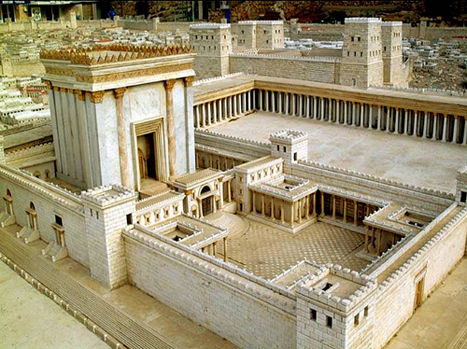
The temple in Jerusalem was like the Vatican, Washington, D.C., and the New York Stock Exchange all rolled into one.   It was the institution that dominated Jesus’ world, the center around which the political, economic, social, and religious map of the life of every Jew was drawn.  And as Jesus went around in Galilee, driving out evil spirits, healing the sick, preaching good news to the poor, ministering with compassion to people who were like sheep without a shepherd, he ran into the local representatives of the temple.  They challenged his authority to do the things he did and they questioned the way that he did them.  And he confronted them about their hypocrisy, and their failure to practice what they preached, and challenged them to renew the essential spirit of their religion.  But this conflict was a stalemate, and it only intensified, until it was inevitable that Jesus would carry the argument to its source.
Jesus didn’t go to the temple to seize power—he went there to talk.  But he wanted to talk about the things that the elite at the temple didn’t want to talk about.  It’s true that they came to him with questions, which he answered with questions of his own, and after one or two of Jesus’ questions they shut their mouths and went away.  And that was because they weren’t really interested in dialogue.  When the chief priests and the scribes sent their spies, as he is teaching in the temple, to ask him “Is it lawful for us to give tribute to Caesar, or not?” they weren’t actually interested in having a conversation about the economic arrangements in an imperialistic world system.  They weren’t asking to talk about the relation between the sovereignty of the Emperor and the sovereignty of God, and which is more deserving of our allegiance.  They were simply bandying words, trying to get him to incriminate himself, and when he tried to lead them into a real exploration of the truth, they had nothing to say.
By the time that Jesus was standing before the high priest himself, he had nothing more to say, either, because it was clear by then that there was no hope of having a real conversation.  Maybe the gospel writers are right, and he knew all along that this was how things were going to go.  Maybe he had no expectation that the temple elite were going to listen to what he had to say.  Maybe he knew perfectly well that they would never open their lives, to an honest examination, let alone consider going in a different direction.  But that’s the thing about knowing the truth—about being committed to the God whose Spirit is truth.  You can’t just sit idly by while the nation you love is poisoned with a never-ending diet of lies.  You have to speak up; you have to ask questions about what is really going on.
On this Passion Sunday, Jesus challenges us again to make our churches places where the hard questions are asked, and where real conversations can happen.   It’s interesting how many of the gospel stories about Jesus’ arguments with his enemies take place while he is worshipping with them in the synagogue, or in their houses having dinner.  If Christian churches can’t hold open a space where people can talk about the hard questions without the stridency of entrenched ideological positions, where else will we find that space?  Can this church be a place where we talk to each other about the things that matter without asking ourselves “is this person a Liberal or a Conservative?” but rather, “What are her values and concerns?  What beliefs and experiences have shaped her understanding of the world?  What can she teach me?”
Jesus rode to certain death because he trusted that love is the truth, and truth only becomes truth when it is communicated.  The truth is something that lives between us, in the space where we touch each other.  Jesus learned about this from God, and so he trusted that God would use him for the truth, even if the only way he could tell it was to die.  So one of the benefits of his death and passion is that we, too, can risk the truth.  We can venture into the space between us where no one is completely guilty, because no one is entirely innocent.  We can sustain a conversation about the hard questions, because Jesus showed us that if we can’t talk honestly about power, our justice is a lie, and if we can’t talk openly about war, our peace is a lie, and if we are afraid to talk about evil, our goodness is a lie. 
And to live a lie is to die every day, a slow, painful, meaningless death.  But as he is dying, Jesus turns to the repentant thief, the one who in the agony of crucifixion finally admits the truth about himself, and he says “today you will be with me in Paradise.”

About Me

My photo
Petaluma, California, United States
I am a priest in the Episcopal Church, and have been (among other things) an organic farmer and gardener, and a Zen monk. I have a lifelong interest in social and spiritual renewal on the basis of contemplative discipline, creative nonviolence, and ecological practice. In recent years my work has focused intensely on the responsibility of pastoral ministry in the humanistic, evangelical, and catholic branch of Christianity known as Anglicanism. I'm married with a daughter, and have three brothers and two parents.