Showing posts with label children. Show all posts

Wednesday, June 22, 2016

Raising the widow's son


Maybe it was because I knew that later this morning I would be preaching in Spanish at the 12 o’clock service here at St. Paul’s, but reading these stories again about widows who lost their only sons, I remembered a woman I met in Guatemala, in the summer of 2009.  I was on my way to Xela, also known as Quetzaltenango, the largest city in the Western Highlands of Guatemala, to study at a Spanish language school, and I stopped over at the popular tourist destination of Lake Atitlán.  I crossed the lake to Santiago, the largest and most traditional of the towns around the shores of that lake, where I would spend the night.  The next morning I left the guesthouse and found that the streets around the central square were lined with venders who’d come in from the countryside, and I went shopping for a souvenir to bring home to my wife.  And that was how I came upon a woman sitting on the ground on a blanket, on which she had spread the things she had for sale.  They included some baskets of tomatoes and other summer vegetables, but also huipiles, the traditional blouses of the indigenous women of southern Mexico and Guatemala. 
She had made them from cloth woven in the violet and lavender striped pattern that is distinctive of that region, and there was one in particular that caught my eye.  It was lavishly embroidered with roses around the collar, and down both the front and back were embroidered birds.  The colorful markings and different beaks of various species were detailed precisely, like illustrations from a birdwatcher’s field guide, and I recognized several whose range extends north.  And I looked over this amazing garment with admiration and smiled at her and complimented her work, but I was sure it would cost more than the maximum I’d decided to allow myself to spend, and moved on down the street.  But, while I saw some other nice things here and there, including some other beautiful huipiles, I kept thinking about that one with the birds, and eventually I went back to look at it again.  The woman named me a price, and while it was more than fair, it was, as I’d feared it would be, more than I could afford.  So I made a counter-offer and we haggled a bit until she finally agreed. 
It was an amount that we both knew was far too low for an object of such singular beauty.  As I handed her the money, and folded my prize away in my backpack I felt glad at having been able to get what I’d really wanted, but I also guilty at having pressed the advantage of my abundant choices over her lack of them.  And the look on her face when I named my answering price has never left me; it spoke of her desperation to make a sale and, at the same time, of the pain of parting with something she’d made with so much love and labor for so little money.  But the thing that really affected me about that pain, even more than having a part in causing it, was that I could see that it was only a ripple across the face of a sorrow that was unfathomably deep.  Grief and loss streamed out toward me from her eyes, and had overflowed from them so much, and for so long, that they had carved deep furrows in her cheeks.
Of course I never heard that woman’s story.  I never learned of the afflictions that filled her life with so much pain that no one with a heart of flesh could fail to see it.  But I do know that Santiago de Atitlán was home to a base of the Guatemalan Army during the height of that country’s dirty war of the 1980s.  From there the soldiers carried out a genocidal campaign of terror in the Mayan villages of the surrounding countryside.  This culminated in a notorious massacre in the streets of Santiago itself in December 1990, when the army opened fire on a peaceful protest for human rights.  So I have always wondered whom that woman might have lost to that violence, or if not to the violence, then to the grinding poverty the violence was meant to hold in place—a father? A husband? A son, or daughter, or more than one?  Maybe all of the above.
And the pain of parting with a beautiful handcrafted object at a price far too cheap is nothing compared to the pain of losing a child.  My wife and I have only one, a beautiful, talented daughter who just completed the sixth grade on Friday.  As all of you who are parents know, your children are your life’s most important creation.  They are the works of priceless value into which you pour countless hours of costly, painstaking, often thankless toil.  But as we parents also know, we have to give them away to the world.  We hope it will be slowly, and by degrees, and the payment we receive will be the rich one of seeing them happy, and doing good work, surrounded by a loving family of their own, maturing into the fullness of their powers as our own begin to falter in the advent of old age.   But we have to live with the knowledge that the world may buy them from us cheaply, sometimes as if their lives were worth next to nothing at all.
It is in response to such a loss that Elijah cried out to God, on behalf of the widow with whom he had been staying, demanding to know if the Lord would really deprive of her of her only son.  He prayed that God would let the child’s life come into him again, and the Lord answered, and the boy lived.  The Gospel story from Luke is very similar, of course, but there are some differences that are worth noting.  The first is that Elijah prays in secret, in the privacy of his own upper room, while Jesus’ is travelling at the head of a large crowd when he meets another crowd, the funeral procession following the body out to the burial, and it is there, in public, at the city gates, that he raises the widow’s son of Nain.  And while Elijah acts on behalf of someone he knows well, in repayment for her kindness, Jesus meets the widow of Nain as a stranger on the road.  He is moved to act on her behalf by nothing more than compassion for the suffering of another human being.
These stories tell us that the heart of the message of the great prophets is God’s desire that his people should have a full share in of life.  That is why there is no difference between the prophets demand for religious faithfulness and their outcry out against violence and poverty and social injustice—because depriving the creatures of God of the full flourishing of their lives is a blasphemous offense to their creator.  For the prophets, this message has to be more than simply empty words—it must be demonstrated and made effective through actions.  And what more powerful demonstration could anyone make of God’s desire to give us the fullness of life than raising the dead?  Jesus takes that prophetic action out into public, and does it for a stranger, to show how far the life-giving compassion of God extends.  It is but a short journey from there to his own death and resurrection, the eternal and universal sign that nothing in heaven or earth can deprive us of the love of God.
It is our faith in Christ’s resurrection that gives us the authority to try our own demonstrations of God’s life-giving compassion.  We may not be able to raise the dead, but there are actions we can take to show people who have lost what is most beautiful and precious that death does not have the last word.   There are things we can do to show those who are trapped in the darkness of powerlessness and despair that they can still rise.  When it actually works it’s a miracle, so needless to say we don’t even dare attempt it without asking for God’s help.  But one of the things that has consistently impressed me about what I’ve been able to observe over the years of this church of St. Paul in Healdsburg, and now I’m speaking as the Dean of the Russian River Deanery, is how, despite many false steps and wrong turns, you are a congregation that keeps trying.   You keep trying to do the things that say to your neighbors that miracles are possible, and God can even raise the dead. 

Raising the widow's son


I gave this sermon at St. Paul's Episcopal Church in Healdsburg, California on June 5, 2016.  I was visiting there in my capacity as Dean of the Russian River Deanery, one of seven sub-regions of the Episcopal Diocese of Northern California, comprised of thirteen congregations in Lake, Sonoma, and Mendocino counties.

1 Kings 17:8-16 (17-24)
Psalm 146
Galatians 1:11-24
Luke 7:11-17


Maybe it was because I knew that later this morning I would be preaching in Spanish at the 12 o’clock service here at St. Paul’s, but reading these stories again about widows who lost their only sons, I remembered a woman I met in Guatemala, in the summer of 2009.  I was on my way to Xela, also known as Quetzaltenango, the largest city in the Western Highlands of Guatemala, to study at a Spanish language school, and I stopped over at the popular tourist destination of Lake Atitlán.  I crossed the lake to Santiago, the largest and most traditional of the towns around the shores of that lake, where I would spend the night.  The next morning I left the guesthouse and found that the streets around the central square were lined with venders who’d come in from the countryside, and I went shopping for a souvenir to bring home to my wife.  And that was how I came upon a woman sitting on the ground on a blanket, on which she had spread the things she had for sale.  They included some baskets of tomatoes and other summer vegetables, but also huipiles, the traditional blouses of the indigenous women of southern Mexico and Guatemala. 
She had made them from cloth woven in the violet and lavender striped pattern that is distinctive of that region, and there was one in particular that caught my eye.  It was lavishly embroidered with roses around the collar, and down both the front and back were embroidered birds.  The colorful markings and different beaks of various species were detailed precisely, like illustrations from a birdwatcher’s field guide, and I recognized several whose range extends north.  And I looked over this amazing garment with admiration and smiled at her and complimented her work, but I was sure it would cost more than the maximum I’d decided to allow myself to spend, and moved on down the street.  But, while I saw some other nice things here and there, including some other beautiful huipiles, I kept thinking about that one with the birds, and eventually I went back to look at it again.  The woman named me a price, and while it was more than fair, it was, as I’d feared it would be, more than I could afford.  So I made a counter-offer and we haggled a bit until she finally agreed. 
It was an amount that we both knew was far too low for an object of such singular beauty.  As I handed her the money, and folded my prize away in my backpack I felt glad at having been able to get what I’d really wanted, but I also guilty at having pressed the advantage of my abundant choices over her lack of them.  And the look on her face when I named my answering price has never left me; it spoke of her desperation to make a sale and, at the same time, of the pain of parting with something she’d made with so much love and labor for so little money.  But the thing that really affected me about that pain, even more than having a part in causing it, was that I could see that it was only a ripple across the face of a sorrow that was unfathomably deep.  Grief and loss streamed out toward me from her eyes, and had overflowed from them so much, and for so long, that they had carved deep furrows in her cheeks.
Of course I never heard that woman’s story.  I never learned of the afflictions that filled her life with so much pain that no one with a heart of flesh could fail to see it.  But I do know that Santiago de Atitlán was home to a base of the Guatemalan Army during the height of that country’s dirty war of the 1980s.  From there the soldiers carried out a genocidal campaign of terror in the Mayan villages of the surrounding countryside.  This culminated in a notorious massacre in the streets of Santiago itself in December 1990, when the army opened fire on a peaceful protest for human rights.  So I have always wondered whom that woman might have lost to that violence, or if not to the violence, then to the grinding poverty the violence was meant to hold in place—a father? A husband? A son, or daughter, or more than one?  Maybe all of the above.
And the pain of parting with a beautiful handcrafted object at a price far too cheap is nothing compared to the pain of losing a child.  My wife and I have only one, a beautiful, talented daughter who just completed the sixth grade on Friday.  As all of you who are parents know, your children are your life’s most important creation.  They are the works of priceless value into which you pour countless hours of costly, painstaking, often thankless toil.  But as we parents also know, we have to give them away to the world.  We hope it will be slowly, and by degrees, and the payment we receive will be the rich one of seeing them happy, and doing good work, surrounded by a loving family of their own, maturing into the fullness of their powers as our own begin to falter in the advent of old age.   But we have to live with the knowledge that the world may buy them from us cheaply, sometimes as if their lives were worth next to nothing at all.
It is in response to such a loss that Elijah cried out to God, on behalf of the widow with whom he had been staying, demanding to know if the Lord would really deprive of her of her only son.  He prayed that God would let the child’s life come into him again, and the Lord answered, and the boy lived.  The Gospel story from Luke is very similar, of course, but there are some differences that are worth noting.  The first is that Elijah prays in secret, in the privacy of his own upper room, while Jesus’ is travelling at the head of a large crowd when he meets another crowd, the funeral procession following the body out to the burial, and it is there, in public, at the city gates, that he raises the widow’s son of Nain.  And while Elijah acts on behalf of someone he knows well, in repayment for her kindness, Jesus meets the widow of Nain as a stranger on the road.  He is moved to act on her behalf by nothing more than compassion for the suffering of another human being.
These stories tell us that the heart of the message of the great prophets is God’s desire that his people should have a full share in of life.  That is why there is no difference between the prophets demand for religious faithfulness and their outcry out against violence and poverty and social injustice—because depriving the creatures of God of the full flourishing of their lives is a blasphemous offense to their creator.  For the prophets, this message has to be more than simply empty words—it must be demonstrated and made effective through actions.  And what more powerful demonstration could anyone make of God’s desire to give us the fullness of life than raising the dead?  Jesus takes that prophetic action out into public, and does it for a stranger, to show how far the life-giving compassion of God extends.  It is but a short journey from there to his own death and resurrection, the eternal and universal sign that nothing in heaven or earth can deprive us of the love of God.
It is our faith in Christ’s resurrection that gives us the authority to try our own demonstrations of God’s life-giving compassion.  We may not be able to raise the dead, but there are actions we can take to show people who have lost what is most beautiful and precious that death does not have the last word.   There are things we can do to show those who are trapped in the darkness of powerlessness and despair that they can still rise.  When it actually works it’s a miracle, so needless to say we don’t even dare attempt it without asking for God’s help.  But one of the things that has consistently impressed me about what I’ve been able to observe over the years of this church of St. Paul in Healdsburg, and now I’m speaking as the Dean of the Russian River Deanery, is how, despite many false steps and wrong turns, you are a congregation that keeps trying.   You keep trying to do the things that say to your neighbors that miracles are possible, and God can even raise the dead. 
Tuesday, November 24, 2015

The Patience of a Saint


Isaiah 25:6-9
Psalm 24
Revelation 21:1-6a
John 11:32-44


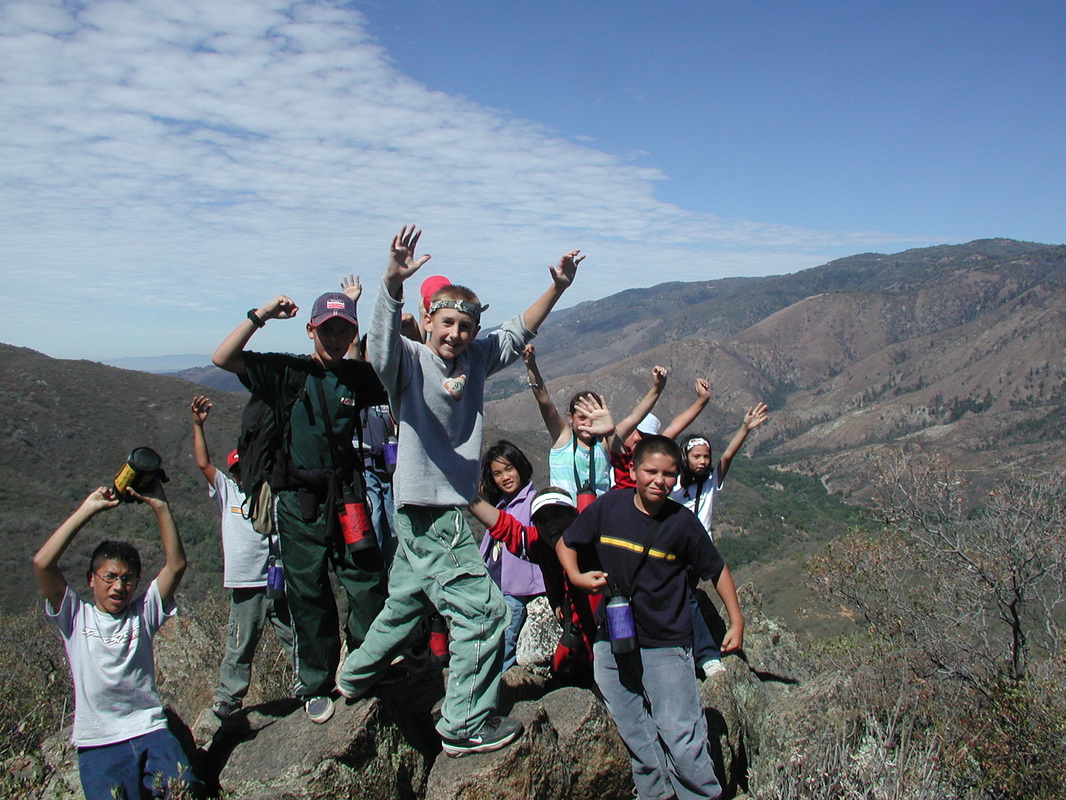
There’s an expression you don’t hear so much anymore that goes, “So-and-so or such-and-such would try the patience of a saint.”  I don’t know who coined that phrase, but it must have been a chaperone at sixth-grade science camp.  That’s how my wife Meg and I spent the first half of last week—chasing 11 and 12 year-olds, trying to keep them in their assigned groups, and move them to their appointed destinations, trying to get them to remember their backpacks, and to wait their turns, and to listen to the naturalists, to stay on the trail, and to go to the bathroom before the next activity was scheduled to begin, to eat the food on their plates, and clear them away when they were done, to separate the garbage from the compostables, and to stop running, stop pushing, stop throwing rocks at the raccoon, to stop talking and go to sleep.
I think I raised my voice at children more in the last week than I have in all my previous years combined.  It gave me no pleasure, but was simply what had to be done.  I daresay that being in loco parentis 23-hours-a-day for seven sixth-grade boys who didn’t know him from Adam, even the proverbial saint would have done the same.  And while I found it useful to let my temper flare from time to time, I only truly lost it once—I was out in the forest with a class who were building lairs for animals with downed wood and other things they found lying around, and when the kids were finished, and had shown the rest what each of their small groups had made, the naturalist told them to dismantle their creations.  A boy named Wyatt decided to carry this order out by smashing his to pieces with a club, and he sent a stick hurtling like a javelin at my head.  Thankfully, it missed me, but not before it scared me enough to yell “Stop that, you idiot!”
I felt badly about that, and probably should have apologized, because aside from that moment, Wyatt wasn’t any more disruptive than many of the other kids on the trip, and was less so than some.  And though it’s tempting to make sweeping judgments about the decline of civilization, I don’t think that I and my friends were all that different when we were in sixth grade.  12-year-old boys can be counted on to make a continuous series of poor decisions.  Left unchecked, they would quickly have turned Alliance Redwoods Camp into a living hell.  So we chaperones had to intervene constantly and forcefully, not merely for the sake of proving our dominance, but on the strength of our moral authority.  Because we had the wisdom of experience and the bigger perspective on the purpose of being there.  We understood what was in their best interest, and what would benefit the larger group, in a way that the children did not.
And we held out the hope, naively perhaps, that if they could set aside their habitual attitude of defiance and disinterest, could restrain their impulse to make foolery of everything, and focus their wandering minds long enough to take in, even just for a minute, what the adults at camp were trying to give them, even the most troublemaking kids might catch a glimpse of that bigger picture.  Perhaps the vastness of the night sky, or the silence of the forest, or the encounter with non-human creatures would make an impact somehow.  Just maybe they would come away from camp with a new appreciation for the world that lies outside the closed doors of their houses and apartments, a world not captured on TV, or in video games, out beyond where the pavement ends.  Maybe they would have a new curiosity about the workings of that world, and their relationship to it, or a new concern about the consequences of their choices for its health and survival.
Maybe, but probably not.  Because, realistically, how much difference can a couple of days make in the life of a child?  There were brief moments with each of the boys in my group when I like to think I met them kindness, understanding, and respect.  But a moment is not a relationship.  It does not go very far toward building a sense of self-worth in a child who is accustomed to neglect or abuse; it will not convince him of the goodness and integrity of the grown-up world, if what he is used to seeing is poverty, oppression, gross materialism, and violence.  And while the methods of crowd control we chaperones used at camp may have been well-intentioned, if you looked at our behavior objectively, it would not have been all that different if its purpose had been to break those children’s spirits, to teach them to be docile and to obey.

I claimed the moral authority to loudly and sternly tell those children what to do, on the premise that as an adult, I have their best interests at heart, and know better than they do what is good for them.  But some of those children already have good reason to know that that’s not always the case.  And all of them, sooner or later, will have to come to terms with the fact that the world of adults is not exactly what it claims to be.  For example, if we honestly evaluated our lives in terms of the values of the Alliance Redwoods Camp, of understanding respect for the ecosystem of which we are a part, and careful stewardship of its future, of courage to take risks, and teamwork to support one another in surmounting new challenges, how well would we really be doing?  When we look around at the world we have made, does it appear that we truly have the big perspective on our purpose for being here?  Can we really say we understand what is in our own best interest, or have chosen what will benefit the whole?      
Today we celebrate with joy that there are men and women who have achieved that perspective, and lived their lives according to that understanding.  We call them “saints” and venerate them, because we recognize that attaining the full maturity of which human beings are capable is not something we can take for granted, but is really quite rare.  We honor the saints for their patience, which is more than merely the capacity to tolerate the exasperating behavior of others.  It is their hope that if we could set aside our habitual defiance and disinterest, and restrain our mockery and cynicism, if we could still our wandering minds and focus on what they are trying to tell us, we also could see what they see and know what they know. 
Their influence endures after their lives are spent, because it does not coerce us to obedience, but awakens us to the subtle allure of life centered in God.  And though the saints hope all things for us, they do not set themselves above us, but choose us for their company.  They do not claim to have earned patience or any other virtues, by their own efforts, but only to have received from God the grace to carry out their appointed tasks.  And very often those tasks are entirely ordinary.  As a matter of fact, the saintliest people I have met in my life have in common an exemplary ordinariness.  To know them is to encounter pure and single-minded devotion not to achieving holiness, or acquiring supernatural gifts, but to being whole-heartedly and transparently themselves.
To know a saint is to see with crystal clarity the utter uniqueness of any human person.  It is also to look into the fathomless depths where all of us are one.  The saints are women and men just like you and I, and in them we see the glory we mistakenly believe to be beyond our reach.  It is the glory that Christ won for us in living the human life of Jesus, Son of Mary of Nazareth, and dying his human death.  His saints hold this glory in trust for us and all humanity, just as adults hold the world in trust for the children.  And the scriptures have a beautiful image for the way it will be when their patience is finally rewarded, and we all enter together into our inheritance.  It is an image of God coming close, embracing us with understanding and compassion, like a father, or a mother, wiping away our tears.  And what could be more ordinary and more universal than that gesture—a parent wiping away the tears of a child? 


About Me

My photo
Petaluma, California, United States
I am a priest in the Episcopal Church, and have been (among other things) an organic farmer and gardener, and a Zen monk. I have a lifelong interest in social and spiritual renewal on the basis of contemplative discipline, creative nonviolence, and ecological practice. In recent years my work has focused intensely on the responsibility of pastoral ministry in the humanistic, evangelical, and catholic branch of Christianity known as Anglicanism. I'm married with a daughter, and have three brothers and two parents.