Showing posts with label holiness. Show all posts

Tuesday, November 24, 2015

The Patience of a Saint


Isaiah 25:6-9
Psalm 24
Revelation 21:1-6a
John 11:32-44
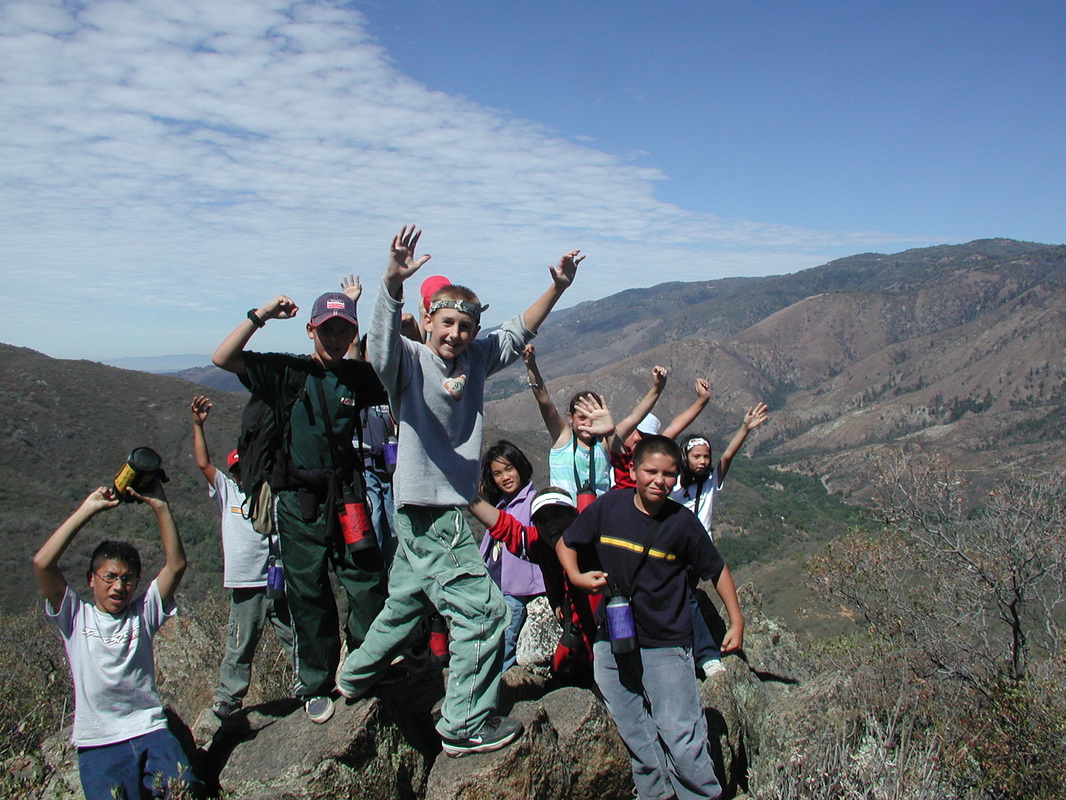

There’s an expression you don’t hear so much anymore that goes, “So-and-so or such-and-such would try the patience of a saint.”  I don’t know who coined that phrase, but it must have been a chaperone at sixth-grade science camp.  That’s how my wife Meg and I spent the first half of last week—chasing 11 and 12 year-olds, trying to keep them in their assigned groups, and move them to their appointed destinations, trying to get them to remember their backpacks, and to wait their turns, and to listen to the naturalists, to stay on the trail, and to go to the bathroom before the next activity was scheduled to begin, to eat the food on their plates, and clear them away when they were done, to separate the garbage from the compostables, and to stop running, stop pushing, stop throwing rocks at the raccoon, to stop talking and go to sleep.
I think I raised my voice at children more in the last week than I have in all my previous years combined.  It gave me no pleasure, but was simply what had to be done.  I daresay that being in loco parentis 23-hours-a-day for seven sixth-grade boys who didn’t know him from Adam, even the proverbial saint would have done the same.  And while I found it useful to let my temper flare from time to time, I only truly lost it once—I was out in the forest with a class who were building lairs for animals with downed wood and other things they found lying around, and when the kids were finished, and had shown the rest what each of their small groups had made, the naturalist told them to dismantle their creations.  A boy named Wyatt decided to carry this order out by smashing his to pieces with a club, and he sent a stick hurtling like a javelin at my head.  Thankfully, it missed me, but not before it scared me enough to yell “Stop that, you idiot!”
I felt badly about that, and probably should have apologized, because aside from that moment, Wyatt wasn’t any more disruptive than many of the other kids on the trip, and was less so than some.  And though it’s tempting to make sweeping judgments about the decline of civilization, I don’t think that I and my friends were all that different when we were in sixth grade.  12-year-old boys can be counted on to make a continuous series of poor decisions.  Left unchecked, they would quickly have turned Alliance Redwoods Camp into a living hell.  So we chaperones had to intervene constantly and forcefully, not merely for the sake of proving our dominance, but on the strength of our moral authority.  Because we had the wisdom of experience and the bigger perspective on the purpose of being there.  We understood what was in their best interest, and what would benefit the larger group, in a way that the children did not.
And we held out the hope, naively perhaps, that if they could set aside their habitual attitude of defiance and disinterest, could restrain their impulse to make foolery of everything, and focus their wandering minds long enough to take in, even just for a minute, what the adults at camp were trying to give them, even the most troublemaking kids might catch a glimpse of that bigger picture.  Perhaps the vastness of the night sky, or the silence of the forest, or the encounter with non-human creatures would make an impact somehow.  Just maybe they would come away from camp with a new appreciation for the world that lies outside the closed doors of their houses and apartments, a world not captured on TV, or in video games, out beyond where the pavement ends.  Maybe they would have a new curiosity about the workings of that world, and their relationship to it, or a new concern about the consequences of their choices for its health and survival.
Maybe, but probably not.  Because, realistically, how much difference can a couple of days make in the life of a child?  There were brief moments with each of the boys in my group when I like to think I met them kindness, understanding, and respect.  But a moment is not a relationship.  It does not go very far toward building a sense of self-worth in a child who is accustomed to neglect or abuse; it will not convince him of the goodness and integrity of the grown-up world, if what he is used to seeing is poverty, oppression, gross materialism, and violence.  And while the methods of crowd control we chaperones used at camp may have been well-intentioned, if you looked at our behavior objectively, it would not have been all that different if its purpose had been to break those children’s spirits, to teach them to be docile and to obey.

I claimed the moral authority to loudly and sternly tell those children what to do, on the premise that as an adult, I have their best interests at heart, and know better than they do what is good for them.  But some of those children already have good reason to know that that’s not always the case.  And all of them, sooner or later, will have to come to terms with the fact that the world of adults is not exactly what it claims to be.  For example, if we honestly evaluated our lives in terms of the values of the Alliance Redwoods Camp, of understanding respect for the ecosystem of which we are a part, and careful stewardship of its future, of courage to take risks, and teamwork to support one another in surmounting new challenges, how well would we really be doing?  When we look around at the world we have made, does it appear that we truly have the big perspective on our purpose for being here?  Can we really say we understand what is in our own best interest, or have chosen what will benefit the whole?      
Today we celebrate with joy that there are men and women who have achieved that perspective, and lived their lives according to that understanding.  We call them “saints” and venerate them, because we recognize that attaining the full maturity of which human beings are capable is not something we can take for granted, but is really quite rare.  We honor the saints for their patience, which is more than merely the capacity to tolerate the exasperating behavior of others.  It is their hope that if we could set aside our habitual defiance and disinterest, and restrain our mockery and cynicism, if we could still our wandering minds and focus on what they are trying to tell us, we also could see what they see and know what they know. 
Their influence endures after their lives are spent, because it does not coerce us to obedience, but awakens us to the subtle allure of life centered in God.  And though the saints hope all things for us, they do not set themselves above us, but choose us for their company.  They do not claim to have earned patience or any other virtues, by their own efforts, but only to have received from God the grace to carry out their appointed tasks.  And very often those tasks are entirely ordinary.  As a matter of fact, the saintliest people I have met in my life have in common an exemplary ordinariness.  To know them is to encounter pure and single-minded devotion not to achieving holiness, or acquiring supernatural gifts, but to being whole-heartedly and transparently themselves.
To know a saint is to see with crystal clarity the utter uniqueness of any human person.  It is also to look into the fathomless depths where all of us are one.  The saints are women and men just like you and I, and in them we see the glory we mistakenly believe to be beyond our reach.  It is the glory that Christ won for us in living the human life of Jesus, Son of Mary of Nazareth, and dying his human death.  His saints hold this glory in trust for us and all humanity, just as adults hold the world in trust for the children.  And the scriptures have a beautiful image for the way it will be when their patience is finally rewarded, and we all enter together into our inheritance.  It is an image of God coming close, embracing us with understanding and compassion, like a father, or a mother, wiping away our tears.  And what could be more ordinary and more universal than that gesture—a parent wiping away the tears of a child? 


Saturday, December 7, 2013

Simple desire


Welcoming remarks to Advent Taizé service of contemplative chant and silence at St. John's, Petaluma on Friday, December 6, 2013.

This is a season during which people are doing everything they can to say that they have faith— faith that the world is a holy place, a place of beauty, and love, and joy, and generosity, and peace.  Sadly, it often seems that the only way we think we can say this is with things.  And I wonder if this is not because we are afraid, and if we do not say it with things because to say it in a more personal way would expose us to the fear in our hearts that is not true.

The practice that we are doing tonight, comes from Taizé, an ecumenical monastic community in France founded in the belief that Faith is something very simple.  It’s not that there are not profound and manifold treasures of wisdom and knowledge in traditions like the one we call The Church.  And it’s not that there is no value in the many cultural expressions of faith that we see in different popular customs, and religious celebrations.  But there is also the need for a very simple style of prayer, a way of being together in worship that expresses the simple desire to know the presence of God in our lives.  Tonight’s service is a way of worship that says that this desire is the essence of faith, and that it is in all of us, and that on this common ground we find that the world is a holy place.

There is a kind of paradox in this—that the simpler the practice, the more universal it is.  This is the paradox of contemplation—that the more receptive we become,  the deeper we go into the silence and solitude of our selves, the closer we come to the active compassion that connects us with others.   Now is a time of year when the natural world speaks to us of this paradox —the further we sink into the darkness of winter, the closer we come to the renewal of the light.  In the Christian tradition the great symbol of this paradox, of simplicity and universal love, of contemplation and revolutionary compassion is Mary, the Mother.  In the story of Mary we see one young woman who carries inside her, in the small dark space of her womb, the entire drama of God’s being with us in the world.  

Holy One,
Teach us to trust the simple light of our longing 
for You,
to let it guide us into the depths of your dazzling
darkness,
that we may become pregnant
with your presence in the world.
Amen

Wednesday, September 19, 2012

Pure religion


Song of Solomon 2:8-13
Psalm 45:1-2, 7-10
James 1:17-27
Mark 7:1-8, 14-15, 21-23

When I was twenty I decided I needed to purify my life.  I was living in a house in Seattle with my oldest brother and a bunch of his bachelor friends, whose mutual interests were punk rock and beer.  I was working at a couple of low-wage jobs downtown, as an early morning janitor and a walking courier in afternoon.  I had a girlfriend but then she dumped me for a guy who drove for the Green Tortoise hippie bus line up and down the coast.  So I decided to start changing things.  I moved out of my brother’s house, and found a new place to live where I could have peace and quiet.  I quit the janitorial job, and started a training program in massage therapy.  And I went on a Macrobiotic diet. 
What this meant was that I got one of those electric crockpots and started cooking large quantities of whole grains, mainly brown rice and millet.  I basically lived on that, plus a lot of vegetables.  I did get some exotic soybean products like tofu, tempeh, and miso, and learned to cook with them.  I learned to like seaweed.  What I didn’t eat was anything sweet or fried.  I didn’t eat meat, eggs, or dairy products.  I hardly ate any fruit.  No bread, or potatoes.  I didn’t even eat peanut butter.  I was always hungry, and I was usually cold, but man, was I healthy.  At least I thought so until I went to visit my parents for Christmas.  My mother almost cried.  I got out the bathroom scale and found that I was down to 110 pounds.  If you’ve ever gone home for the holidays and been amazed at how much your mother can feed you, you can guess what the next week was like for me.  Needless to say, the Macrobiotic diet was over. 
And I didn’t really miss it, because it wasn’t really about the food.  It was about regaining control over my life.  It was about making a boundary, so that my body would be a space that only good things, only pure things, could enter.  And this is what the scribes and Pharisees in this morning’s text from the Gospel of Mark are all about.  Their scrupulous rituals of washing their hands, washing their food, and washing their dishes are not based on principles of hygiene.  They are about creating a space apart, a sacred space, a kind of preserve of holiness in the midst of a dirty, crazy world.
And this is one of the things that religion does.  Religion can draw a map of the world, a map with clear boundaries, drawn in thick, black lines.  Rituals, doctrines, rules of moral behavior can all serve to mark off a defensible space.  Sometimes it’s an actual physical space, like the precincts of a church or a temple or a monastery.  But it can also be a social space, like a denomination, or a congregation, or even a psychic and bodily space.   And for those who understand this religious map, those marked-off spaces are where you find holiness.   The people and the things inside the boundaries are holy people, holy things, and anyone and anything that comes in from outside must first be purified.  Religious traditions, and institutions, and authorities all work together to maintain the holy space, to defend it and keep it pure and uncontaminated by the profane world. 
But Jesus shows up with a different kind of religion.  His religion is the freedom of the human heart that is loved by God.   It’s a heart that doesn’t try to wall itself off from the world, because it knows that the dirt and craziness of that world are right there within itself, and that God loves it anyway.  Jesus meets the crazy people in the world, and touches them and calls the unclean spirits out of their souls.  He sits down at table with dirty people, with tax collectors and sinners, and eats with them.  Some of his disciples don’t even wash their hands.  But Jesus is not afraid of “catching something” that will make him unfit to enter holy ground.  He is not concerned with keeping any space holy but the space that God’s Spirit of love creates in our hearts, and for the one who dwells in that space the whole world is holy.

The Song of Solomon is a love poem which has been read in the Christian mystical tradition as an allegory of the courtship that Christ pays to our soul.  The imagery that comes to us from that poem this morning is of the lover’s infectious joy that draws us out of our enclosed spaces into freedom.  Like a gazelle or a young stag the beloved stands on the other side of the wall of our fears, peering in at the windows of our obsessions, peeking through the lattice of our need for control and saying “Arise, my love, and come away.”   This is the invitation that Christ speaks to us, to trust the one who loves us with such gladness and passion, to arise and go with him into the world as into a springtime of delight, into a wide-open sacred space alive with beauty, and pleasure, and joy.
The Letter of James describes the gift of Christ’s love for us as like a mirror.  We can get stuck there, gazing at the reflection of our own selves as we appear in the light of grace.  We can keep looking and looking, trying to hang on to the feeling of that first glimpse, and in this way the grace of God, the love of Christ, the forgiveness of our sins, the salvation of our souls, all the life-giving good news of the Gospel can become another prison, another enclosed, holy space that we have to keep pure.  But James suggests another possibility, the possibility of looking into that mirror, of gratefully receiving the grace of seeing ourselves as Christ sees us, and then turning and going away to serve.  That vision of goodness can be something not to cling to, but something to give to others.  We can walk in generosity and freedom, not turned inward in a hungry search for more and more holy experience, but open-hearted, allowing the love of Christ to flow through us to the world. 
There was another thing I did when I was trying to remake my life that autumn in Seattle.  I called a telephone number from an advertisement in the free weekly newspaper, and I ordered a set of meditation cushions.  A week or so later I got off the bus in an unfamiliar part of town and walked a couple of blocks to an old house, surrounded by a rambling but well-tended flower garden.  At the gate I met the woman I’d spoken to on the phone, and she invited me in and I gave her a check, and she gave me the things she had sewn—a round firm pillow and a thin square mat.  I carried them home on the bus and I got up the next morning before sunrise and sat down on my pillow and my mat and crossed my legs and started learning how to be in the world in a different way.  I never did become a massage therapist.  The macrobiotic diet you already know about.  But I still have those cushions, twenty-seven years later.  I even use them sometimes.
Jesus calls us to stop trying to create defensible spaces of holiness in the world.  Instead he says, “Arise, my love, my fair one, and come away.  Let me give you holiness in the sanctuary of your hearts, a sanctuary that you sweep clean day by day with prayer, that you wash with tears, and consecrate with songs.  Enter that sanctuary and drink from its deep silence, and in that silence hear my voice.  Let me light a sacred fire there, the Spirit of love and compassion, and generosity to the world.   Take that fire with you, wherever you go, even to the dirty, crazy places.   And you will find that, even there, holiness comes out to meet you.”

About Me

My photo
Petaluma, California, United States
I am a priest in the Episcopal Church, and have been (among other things) an organic farmer and gardener, and a Zen monk. I have a lifelong interest in social and spiritual renewal on the basis of contemplative discipline, creative nonviolence, and ecological practice. In recent years my work has focused intensely on the responsibility of pastoral ministry in the humanistic, evangelical, and catholic branch of Christianity known as Anglicanism. I'm married with a daughter, and have three brothers and two parents.