Showing posts with label Ruth. Show all posts

Tuesday, November 24, 2015

What it's all about


I was in my office on Wednesday picking out this morning’s hymns, when some visitors came to the door.  Marian Nelson was the receptionist and went to greet them.  A couple, maybe in their sixties, came in, and the woman introduced herself as the great-granddaughter of a former rector of this parish, and she asked if we would mind if she showed her husband the church.   My ears pricked up at this and I got up from my desk and went to the doorway and asked which rector that was, and she said “John Partridge.”  Well, this got me excited, because John Partridge was among the two or three most notable of my predecessors.  St. John’s went through its first big schism in 1882, and it was Partridge who came in the aftermath and led the congregation back to health, and remained in office for almost thirty years.  So I took a little time to give Sarah Healy and her husband Mike a tour. 
I took them to the archives room and showed her our little trove of parish newsletters from her great-grandfather’s time.  I showed them the photo in the kitchen of the waiters at the Chicken Pie Dinner of 1902, and Sarah picked out her grandmother, Marion, then just a girl.  Then we came over here to this church that was built early in Partridge’s tenure, and she told me a little more about the story of that stained-glass window that we just had repaired, the one in the back that shows Jesus healing a blind man.
As some of you have no doubt noticed, the dedication on the bottom of that window says that it was given in gratitude for the recovery of the rector of this parish at Christmas, 1910.   Mrs. Healy said that, according to the family lore, Reverend Partridge was preaching one Sunday where I am standing now when suddenly he stopped.  His daughter Alma was the first to see that something was wrong, and went and led him down from the pulpit.  For he had suffered a stroke, and could neither speak nor see.   But after for a time he recovered, hence the window.   
That window is an image of Jesus the man, not Jesus idealized as the Good Shepherd, or Christ, glorified and ascended, but Jesus as he was when he went about in Palestine ministering to the people, and it was given in gratitude for an ordinary miracle of healing in the body of a friend.  The two windows beside it are similar—portrayals of Jesus, the man, in relation to others: as the kindly teacher, letting the children come to him, as the infant playing on his mother’s lap.  Even this great window above the altar is not an image of heaven, but of an early spring morning in a garden near the walls of Jerusalem, and three women who went to visit a tomb.  And the messenger of God who dominates the frame is speaking to them about Jesus, their departed loved one: “Why do you look for the living among the dead?  He is not here!”
I don’t know if they did so consciously, or not, but our ancestors in this church left us, in these windows, an extraordinary statement.  They surrounded us with images of the holy as encountered in the lives of human beings like us, as if to say this is what religion is about.   In a sense the gospel lesson for today has much the same message.  We have followed the course of Mark’s Gospel through the year and have finally arrived, with Jesus, at the temple in Jerusalem.  But now that he’s there, he seems entirely unconcerned with the official worship that is going on, with the priests and the cultic rituals that are supposed to be the whole point.   What Jesus pays attention to are the people in attendance, and all that’s going on around the edges, if you will, of the main event.  He wants his disciples to see who is profiting, and who is paying the cost, who is making a show of his importance before Israel, and who is humbly worshipping Israel’s God. 
And yet nowhere in all of this does Jesus criticize religion as such.  He does not call the poor widow deluded for giving all she has to the temple; but he praises her generosity.  Jesus is concerned about the spirit in which his people practice their religion, and what it really says about their love of God and neighbor, but he does not advocate a purely human spirit.  He does not reduce all values to human values.  Jesus wants us to look for the true measure of the pomp and grandeur of the temple, in the poor widow who contributes to its upkeep.  But this standard is almost impossibly difficult.   Not for the first time in the gospel, he advocates giving away all one’s wealth.  He equates it with giving away one’s life, which, by the way, he’s also recommended. 

Which implies that there is some other standard by which to judge our lives, some other way to understand our proper role and destiny, some orientation for our hopes and our efforts that makes us more than particularly clever animals.  We are called to pursue something more than what an animal wants—comfort, security, survival, successful reproduction—and there is a fulfilment that lies in store for us that is greater than that which we will find simply by meeting those creaturely needs.  We are called to know that we are something more than individual members of a species, to know ourselves not as separate, disconnected from all that is not “us”, but that our true identity somehow includes everything. 
The church measures its value to the world by its saints; by the men and women who met that standard, and followed that call, and gave their whole lives to the service of that “something greater”—holy virgins, monks, and martyrs, missionaries who left behind all that was familiar to preach the gospel to strange peoples far from home, servant pastors who gave up social privilege to live among the poor.  We remember them, and honor their greatness of soul in offering themselves so completely for love—love  of the supreme truth, the supreme goodness, the supreme beauty that fills and transcends all singular forms.  We celebrate that in doing so, they became embodiments of what they loved.
The saints reveal an alternative image of what it means to be human, but this image that does not easily conform to conventional cultural values, be they Jewish, Greek, or Roman, English or Mexican, Ethiopian or Japanese.  It confronts what we take for granted as the aims of life with the stark question of the ultimate.  The traditional Christian ideal of holiness says to us that, while all we do to satisfy ourselves may be well and good, the individual existence that so preoccupies our lives will not endure forever.  It will end, and it will come under judgment.  And the standard of that judgment will not be the conventional wisdom of our culture, but Jesus Christ, who gave himself up to death on a cross, though he was the unacknowledged ruler of the world.

As we come to the end of the Christian year, our Sunday readings bring us again to Jerusalem and to that cross.  And it looks different in the falling darkness of November from how it appeared in the rising light of spring.  Then it was something that happened to Jesus and his disciples, in an out of the way corner of the world, and it resulted in the birth of something new, the church.  But now it appears as a judgment that is falling on the whole earth, the church included.  Nevertheless, we are not afraid.  We take heart in our communion with the saints, who hope for nothing more than the coming of that day.   They live as if they already stand under that judgment, and ask nothing from this age of the world, but that it pass away before the glorious advent of the Kingdom of God. 
But the end of the Christian year, like everything in our tradition, is not just that simple.  Because there’s another theme that now appears in our Sunday readings, like Ruth quietly stealing in to lie down with Boaz on the threshing floor.  It comes with an earthly kind of hope, a woman’s hope for the ordinary blessings of love and security, and a happy old age.   It seeks an ordinary holiness, in faithful friendship, and family ties, in worldly wisdom, and the kindness of strangers.   And its sign is the birth of a child.


The Patience of a Saint


Isaiah 25:6-9
Psalm 24
Revelation 21:1-6a
John 11:32-44


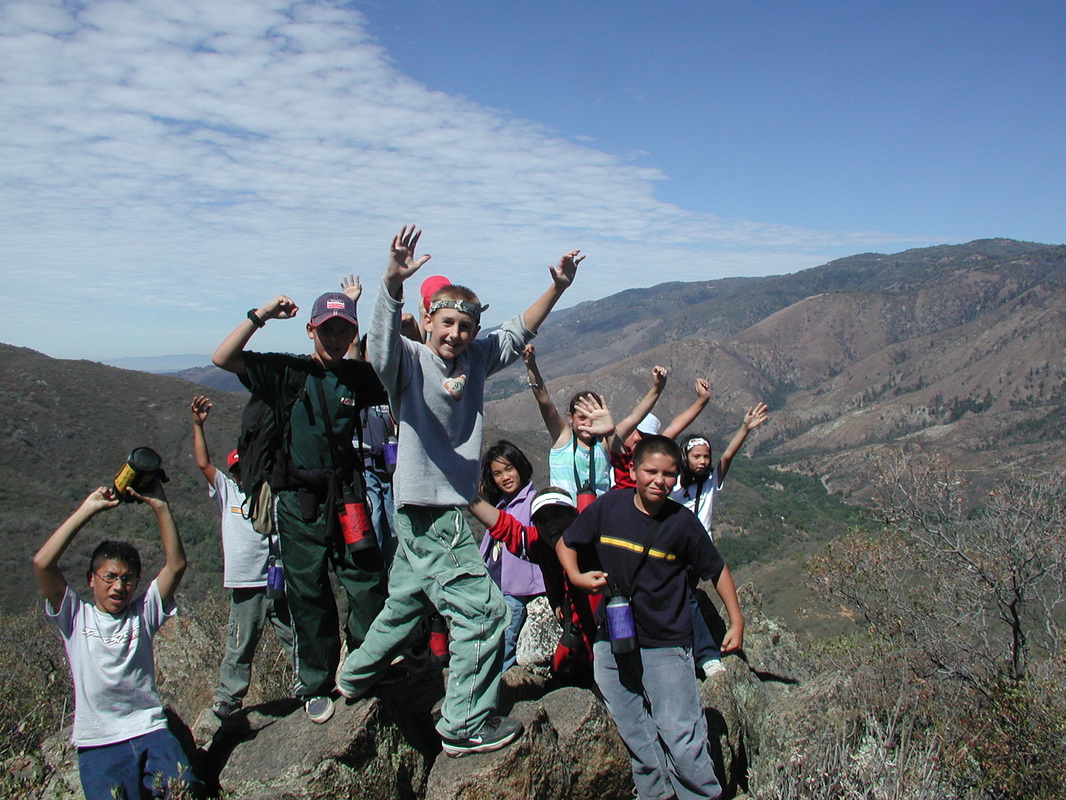
There’s an expression you don’t hear so much anymore that goes, “So-and-so or such-and-such would try the patience of a saint.”  I don’t know who coined that phrase, but it must have been a chaperone at sixth-grade science camp.  That’s how my wife Meg and I spent the first half of last week—chasing 11 and 12 year-olds, trying to keep them in their assigned groups, and move them to their appointed destinations, trying to get them to remember their backpacks, and to wait their turns, and to listen to the naturalists, to stay on the trail, and to go to the bathroom before the next activity was scheduled to begin, to eat the food on their plates, and clear them away when they were done, to separate the garbage from the compostables, and to stop running, stop pushing, stop throwing rocks at the raccoon, to stop talking and go to sleep.
I think I raised my voice at children more in the last week than I have in all my previous years combined.  It gave me no pleasure, but was simply what had to be done.  I daresay that being in loco parentis 23-hours-a-day for seven sixth-grade boys who didn’t know him from Adam, even the proverbial saint would have done the same.  And while I found it useful to let my temper flare from time to time, I only truly lost it once—I was out in the forest with a class who were building lairs for animals with downed wood and other things they found lying around, and when the kids were finished, and had shown the rest what each of their small groups had made, the naturalist told them to dismantle their creations.  A boy named Wyatt decided to carry this order out by smashing his to pieces with a club, and he sent a stick hurtling like a javelin at my head.  Thankfully, it missed me, but not before it scared me enough to yell “Stop that, you idiot!”
I felt badly about that, and probably should have apologized, because aside from that moment, Wyatt wasn’t any more disruptive than many of the other kids on the trip, and was less so than some.  And though it’s tempting to make sweeping judgments about the decline of civilization, I don’t think that I and my friends were all that different when we were in sixth grade.  12-year-old boys can be counted on to make a continuous series of poor decisions.  Left unchecked, they would quickly have turned Alliance Redwoods Camp into a living hell.  So we chaperones had to intervene constantly and forcefully, not merely for the sake of proving our dominance, but on the strength of our moral authority.  Because we had the wisdom of experience and the bigger perspective on the purpose of being there.  We understood what was in their best interest, and what would benefit the larger group, in a way that the children did not.
And we held out the hope, naively perhaps, that if they could set aside their habitual attitude of defiance and disinterest, could restrain their impulse to make foolery of everything, and focus their wandering minds long enough to take in, even just for a minute, what the adults at camp were trying to give them, even the most troublemaking kids might catch a glimpse of that bigger picture.  Perhaps the vastness of the night sky, or the silence of the forest, or the encounter with non-human creatures would make an impact somehow.  Just maybe they would come away from camp with a new appreciation for the world that lies outside the closed doors of their houses and apartments, a world not captured on TV, or in video games, out beyond where the pavement ends.  Maybe they would have a new curiosity about the workings of that world, and their relationship to it, or a new concern about the consequences of their choices for its health and survival.
Maybe, but probably not.  Because, realistically, how much difference can a couple of days make in the life of a child?  There were brief moments with each of the boys in my group when I like to think I met them kindness, understanding, and respect.  But a moment is not a relationship.  It does not go very far toward building a sense of self-worth in a child who is accustomed to neglect or abuse; it will not convince him of the goodness and integrity of the grown-up world, if what he is used to seeing is poverty, oppression, gross materialism, and violence.  And while the methods of crowd control we chaperones used at camp may have been well-intentioned, if you looked at our behavior objectively, it would not have been all that different if its purpose had been to break those children’s spirits, to teach them to be docile and to obey.

I claimed the moral authority to loudly and sternly tell those children what to do, on the premise that as an adult, I have their best interests at heart, and know better than they do what is good for them.  But some of those children already have good reason to know that that’s not always the case.  And all of them, sooner or later, will have to come to terms with the fact that the world of adults is not exactly what it claims to be.  For example, if we honestly evaluated our lives in terms of the values of the Alliance Redwoods Camp, of understanding respect for the ecosystem of which we are a part, and careful stewardship of its future, of courage to take risks, and teamwork to support one another in surmounting new challenges, how well would we really be doing?  When we look around at the world we have made, does it appear that we truly have the big perspective on our purpose for being here?  Can we really say we understand what is in our own best interest, or have chosen what will benefit the whole?      
Today we celebrate with joy that there are men and women who have achieved that perspective, and lived their lives according to that understanding.  We call them “saints” and venerate them, because we recognize that attaining the full maturity of which human beings are capable is not something we can take for granted, but is really quite rare.  We honor the saints for their patience, which is more than merely the capacity to tolerate the exasperating behavior of others.  It is their hope that if we could set aside our habitual defiance and disinterest, and restrain our mockery and cynicism, if we could still our wandering minds and focus on what they are trying to tell us, we also could see what they see and know what they know. 
Their influence endures after their lives are spent, because it does not coerce us to obedience, but awakens us to the subtle allure of life centered in God.  And though the saints hope all things for us, they do not set themselves above us, but choose us for their company.  They do not claim to have earned patience or any other virtues, by their own efforts, but only to have received from God the grace to carry out their appointed tasks.  And very often those tasks are entirely ordinary.  As a matter of fact, the saintliest people I have met in my life have in common an exemplary ordinariness.  To know them is to encounter pure and single-minded devotion not to achieving holiness, or acquiring supernatural gifts, but to being whole-heartedly and transparently themselves.
To know a saint is to see with crystal clarity the utter uniqueness of any human person.  It is also to look into the fathomless depths where all of us are one.  The saints are women and men just like you and I, and in them we see the glory we mistakenly believe to be beyond our reach.  It is the glory that Christ won for us in living the human life of Jesus, Son of Mary of Nazareth, and dying his human death.  His saints hold this glory in trust for us and all humanity, just as adults hold the world in trust for the children.  And the scriptures have a beautiful image for the way it will be when their patience is finally rewarded, and we all enter together into our inheritance.  It is an image of God coming close, embracing us with understanding and compassion, like a father, or a mother, wiping away our tears.  And what could be more ordinary and more universal than that gesture—a parent wiping away the tears of a child? 


About Me

My photo
Petaluma, California, United States
I am a priest in the Episcopal Church, and have been (among other things) an organic farmer and gardener, and a Zen monk. I have a lifelong interest in social and spiritual renewal on the basis of contemplative discipline, creative nonviolence, and ecological practice. In recent years my work has focused intensely on the responsibility of pastoral ministry in the humanistic, evangelical, and catholic branch of Christianity known as Anglicanism. I'm married with a daughter, and have three brothers and two parents.